

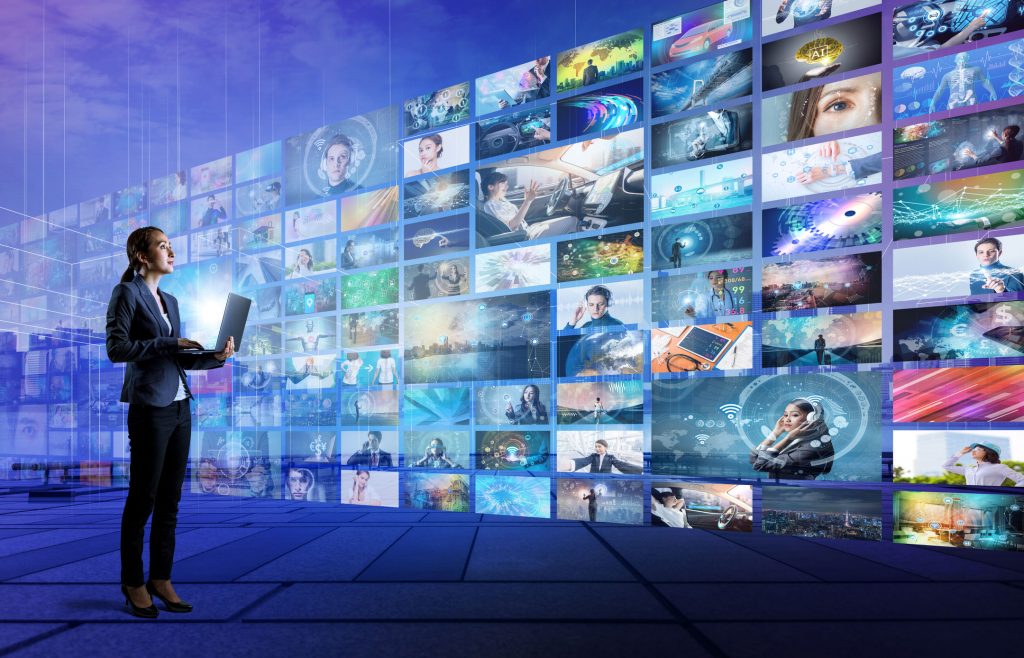
How Digital Platforms Are Changing Entertainment is visible in the way people watch, listen, play, discover, and discuss media. Streaming services, social platforms, gaming networks, creator channels, and recommendation systems have shifted entertainment from scheduled distribution toward on-demand, personalized, and interactive experiences.
This guide explains how platforms are reshaping television, music, gaming, live events, creator careers, advertising, subscriptions, and audience behavior. It also examines fragmentation, algorithms, pricing pressure, fandom, platform dependence, and what these changes mean for consumers and businesses.
Entertainment Has Shifted From Channels to Platforms
Traditional entertainment distribution was relatively straightforward.
Television networks scheduled programs. Cinemas controlled movie screenings. Radio stations programmed music. Publishers and record labels determined much of what reached mass audiences.
Digital platforms changed that structure.
Audiences can now move between:
- streaming television;
- music services;
- social video;
- podcasts;
- games;
- livestreams;
- creator channels;
- digital communities.
The result is a more fragmented entertainment environment where television programs, games, videos, music, and creators often compete for the same limited amount of attention.
Deloitte’s 2026 Digital Media Trends research found that the average U.S. consumer spends about six hours per day across media and entertainment activities, demonstrating the scale of competition for audience time.
Read More: Online Privacy Tips Everyone Should Know
Digital Entertainment Trends at a Glance
| Change | What Platforms Enable | Effect on Entertainment |
|---|---|---|
| On-demand streaming | Watch or listen anytime | Less dependence on schedules |
| Recommendation algorithms | Personalized discovery | Different audiences see different content |
| Creator platforms | Direct publishing | More creators can build audiences |
| Subscription models | Recurring access | Revenue shifts toward memberships |
| Ad-supported streaming | Lower-cost access | Advertising returns to streaming |
| Social video | Fast, shareable content | Short-form entertainment grows |
| Gaming platforms | Interactive communities | Entertainment becomes participatory |
| Digital distribution | Global availability | Content can reach international audiences |
| Live streaming | Real-time interaction | Viewers participate during broadcasts |
| Cross-platform fandom | Multiple formats around one property | Entertainment becomes an ecosystem |
1. Streaming Has Changed Television Viewing
Streaming has moved from being an alternative to traditional television toward becoming one of its dominant distribution methods.
Nielsen reported that streaming accounted for 48.6% of total U.S. television viewing in May 2026. YouTube alone accounted for 13.8% of television watch time in that month’s Media Distributor Gauge.
That is important because streaming no longer happens only on phones and laptops.
Viewers increasingly watch digital platforms on television screens in the living room.
Entertainment Is No Longer Built Around the Schedule
A viewer can:
- start a series whenever convenient;
- watch several episodes consecutively;
- pause across devices;
- return weeks later;
- receive recommendations for another program immediately.
That changes how entertainment companies release and promote content.
Some programs arrive as full seasons.
Others use weekly releases to maintain discussion and subscriptions for longer periods.
The scheduling decision itself has become part of platform strategy.
2. Streaming Is Becoming More Like Traditional Television
One of the interesting developments in digital entertainment is that streaming originally differentiated itself partly by offering fewer advertisements.
That distinction is becoming less clear.
Deloitte’s March 2026 research found that 68% of surveyed U.S. streaming-video subscribing households had at least one ad-supported streaming service.
Ad-supported plans can allow services to offer lower prices while generating advertising revenue.
The Business Model Is Becoming Hybrid
Streaming platforms can now combine:
- subscription fees;
- advertising;
- premium tiers;
- live-event access;
- transactional purchases.
The future of streaming may therefore resemble a combination of subscription television and digital advertising rather than a completely ad-free replacement for traditional TV.
3. Subscription Fatigue Is Changing Consumer Behavior
Digital platforms gave consumers more choice.
They also created more subscriptions.
Deloitte’s 2026 research found that U.S. households with paid streaming video averaged four services and spent about $69 per month on them. It also found that 41% of surveyed consumers had canceled at least one paid streaming-video service within the previous six months.
That behavior is commonly called churn.
Why Consumers Cancel
Possible reasons include:
- price increases;
- finishing a specific show;
- financial pressure;
- insufficient new content;
- switching to another service.
This creates a difficult challenge for streaming companies.
Acquiring subscribers is not enough.
Platforms also need compelling reasons for subscribers to remain.
4. Platforms Are Competing for Fandom, Not Just Viewing
A person may watch one program casually.
A fan behaves differently.
Fans may:
- follow actors or creators;
- purchase merchandise;
- play related games;
- attend events;
- participate in online communities;
- watch interviews;
- follow podcasts;
- create fan content.
Deloitte’s 2026 Digital Media Trends research found that around 80% of surveyed consumers identified as fans of at least one entertainment category. Fans also spent more time and money on entertainment than non-fans in the survey.
Entertainment Properties Are Becoming Ecosystems
A successful television series may now expand into:
- social videos;
- podcasts;
- games;
- merchandise;
- live events;
- online communities.
The business opportunity extends beyond the original content.
5. Social Media Has Become an Entertainment Destination
Social platforms were once primarily associated with communication between friends.
They increasingly function as entertainment networks.
Users open platforms to watch:
- comedy;
- sports clips;
- commentary;
- documentaries;
- gaming;
- music;
- lifestyle videos;
- creator series.
Deloitte found that 32% of surveyed consumers said social-media content was more relevant to them than traditional media content, while 33% said they felt a stronger personal connection to social creators than to television personalities or actors.
Those figures do not mean traditional media has disappeared.
They show that creators now compete for cultural attention alongside established entertainment companies.
6. Creators Can Build Media Businesses Directly
Digital platforms have reduced some traditional barriers between creators and audiences.
A creator can potentially:
- produce a video;
- publish it directly;
- build subscribers;
- monetize attention;
- develop merchandise or memberships.
YouTube said in August 2026 that more than three million creators participated in its YouTube Partner Program.
That scale shows how digital platforms have created a large commercial ecosystem around individual creators and smaller production teams.
Creators Are Becoming Media Companies
Successful creators may now employ:
- editors;
- producers;
- researchers;
- designers;
- sales teams;
- managers.
The boundary between an independent creator and a traditional media company is increasingly blurred.
7. Algorithms Are Becoming Entertainment Gatekeepers
Traditional media often relied on editors, programmers, or schedules to determine what audiences encountered.
Digital platforms increasingly use recommendation algorithms.
These systems may consider signals such as:
- viewing history;
- listening behavior;
- engagement;
- follows;
- searches;
- similar users;
- content characteristics.
The practical result is that two people opening the same platform can receive very different entertainment experiences.
Discovery Is More Personalized
This can help users find niche content they might never encounter through traditional programming.
A documentary, independent musician, small gaming channel, or specialized podcast can potentially reach the exact audience interested in it.
Personalization Also Has Trade-Offs
Users may repeatedly receive content similar to what they already consume.
Creators can also become highly dependent on recommendation systems they do not control.
A platform algorithm change can therefore affect:
- reach;
- views;
- revenue;
- audience growth.
8. Music Has Become a Streaming-First Industry
Digital platforms have fundamentally changed music consumption.
Listeners can access enormous catalogs instantly rather than purchasing individual albums or songs.
IFPI reported that streaming generated 69.6% of global recorded-music revenue in 2025, with total streaming revenue exceeding $22 billion. Paid streaming subscriptions reached 837 million users globally.
Music Discovery Has Changed Too
Listeners can find music through:
- personalized playlists;
- algorithmic radio;
- social videos;
- creator recommendations;
- user-generated playlists;
- search.
A song can gain worldwide attention without first becoming a traditional radio hit.
9. Songs Are Increasingly Connected to Social Platforms
Music and social video are increasingly interconnected.
A track may become popular because it is used in:
- dance videos;
- memes;
- challenges;
- edits;
- tutorials;
- creator clips.
This changes music marketing.
Labels and artists no longer promote only through:
- radio;
- television;
- print;
- touring.
They also consider how songs travel through digital communities.
However, designing every song specifically around a potential viral moment can be risky. Viral attention is unpredictable, and long-term artist development still depends on much more than short-form visibility.
10. Gaming Is Now a Major Entertainment Platform
Video games are not simply another type of content competing against television.
Modern gaming platforms combine:
- entertainment;
- communication;
- competition;
- social interaction;
- user-generated content;
- live events.
The Entertainment Software Association reported in 2026 that 212 million Americans play video games at least weekly, representing 67% of people ages 5 to 90 in its U.S. study.
U.S. consumer spending on video games reached approximately $60.8 billion in 2025 after the data was revised, according to ESA reporting based on Circana and Sensor Tower.
Games Are Social Spaces
ESA’s 2026 research also found substantial social interaction around gaming, including players using games to stay connected with friends and family.
Entertainment is therefore becoming something audiences participate in rather than merely watch.
11. Subscription Models Are Changing Gaming
Gaming platforms increasingly combine traditional game sales with:
- subscriptions;
- downloadable content;
- in-game purchases;
- online memberships.
ESA reported that U.S. consumer spending on video-game subscription services increased 20% in 2025.
Subscriptions can give players access to collections of games rather than requiring a separate purchase for every title.
For publishers and platform owners, subscriptions can also create recurring revenue.
The challenge is similar to video streaming: customers will continue paying only when they perceive sufficient ongoing value.
12. Entertainment Is Becoming More Interactive
Television and cinema traditionally placed viewers primarily in a passive role.
Digital platforms encourage participation.
Users can:
- comment;
- vote;
- livestream;
- chat;
- remix;
- create reaction videos;
- join communities;
- modify games.
This participation changes the relationship between audience and creator.
Feedback can arrive within minutes of publication.
Creators may then adjust future content based on audience reactions.
That creates a much shorter feedback cycle than traditional media historically allowed.
13. Live Entertainment Is Moving Onto Digital Platforms
Streaming platforms increasingly compete for live programming.
This can include:
- sports;
- concerts;
- award shows;
- creator events;
- gaming tournaments.
Nielsen’s May 2026 Gauge noted significant viewing around live sports across both streaming-associated distributors and traditional broadcasters.
Live programming has strategic value because it encourages viewers to watch at the same time rather than postponing consumption.
Live Events Also Create Community
Real-time chat and social discussion can make a digital event feel communal.
This partly recreates one of traditional television’s major strengths: large audiences experiencing something simultaneously.
14. Traditional Media and Creator Media Are Converging
The distinction between “professional entertainment” and “internet content” is becoming less useful.
Traditional studios increasingly:
- collaborate with creators;
- distribute clips socially;
- produce podcasts;
- use digital communities for promotion.
Creators increasingly:
- build professional studios;
- employ production teams;
- license formats;
- produce long-form shows.
YouTube’s 2026 strategy explicitly describes creators as building media companies and positions the platform as part of the broader entertainment industry.
The two systems are increasingly interconnected rather than separate.
15. Entertainment Is Becoming Global by Default
Traditional distribution often required separate deals in different markets.
Digital platforms can make content available internationally much faster.
A creator in one country can potentially build audiences thousands of miles away.
This creates opportunities for:
- international fandom;
- multilingual creators;
- global music releases;
- international gaming communities;
- cross-border collaborations.
Streaming has also supported growth in markets outside the traditional centers of the entertainment industry.
IFPI reported recorded-music revenue growth across every major global region in 2025, with especially strong growth in Latin America and Asia.
16. Subtitles and Dubbing Are Expanding Audiences
Language barriers have historically limited international distribution.
Digital workflows make:
- subtitles;
- dubbing;
- translations;
- localized metadata
easier to produce and distribute.
AI-assisted tools are accelerating some of these processes further.
However, translation quality still matters.
Poor localization can distort:
- humor;
- emotion;
- cultural references;
- character personality.
Technology can increase accessibility, but high-quality localization still benefits from human linguistic and cultural judgment.
17. Advertising Is Becoming More Targeted
Traditional television advertisers often purchased access to broad demographic audiences.
Digital platforms can use much more granular information.
Depending on the platform and applicable privacy rules, advertisers may target according to factors such as:
- interests;
- location;
- viewing behavior;
- previous interactions.
This can make entertainment advertising more measurable.
Advertisers may track:
- impressions;
- clicks;
- conversions;
- viewing completion.
The trade-off is increased concern about data collection and privacy.
18. Entertainment Companies Know More About Audience Behavior
Traditional media measurement often relied heavily on samples, ratings, ticket sales, and album purchases.
Digital platforms can observe detailed patterns such as:
- when someone stops watching;
- which episode they start next;
- which songs they skip;
- what they search for;
- how long they play;
- what they share.
This can improve decision-making.
It can also create incentives to optimize content aggressively around engagement metrics.
Data can reveal behavior.
It cannot automatically explain why audiences felt emotionally connected to a particular story.
Creative judgment therefore remains important.
19. Short-Form Video Has Changed Content Structure
Short-form platforms encourage creators to capture attention quickly.
This has influenced:
- editing pace;
- video length;
- opening hooks;
- visual storytelling;
- captions;
- music selection.
The influence is spreading beyond social media.
Traditional entertainment marketing now frequently uses short clips designed for vertical mobile viewing.
Short Does Not Mean Simple
Producing an effective 30-second video can require careful decisions about:
- timing;
- storytelling;
- editing;
- text;
- sound.
The format is different from television or long-form video rather than automatically easier.
20. Long-Form Content Has Not Disappeared
The rise of short video does not mean audiences only want brief entertainment.
Long-form:
- podcasts;
- video essays;
- livestreams;
- television series;
- gaming sessions
continue to attract substantial audiences.
Digital platforms allow short and long formats to coexist.
A short social video may introduce a creator.
A two-hour podcast may deepen the relationship.
A livestream may create community.
Entertainment strategies increasingly use several formats together.
21. Platforms Are Blurring Content Categories
A single platform may now contain:
- television-style shows;
- podcasts;
- livestreams;
- music;
- short videos;
- films;
- sports;
- educational content.
This creates direct competition between formats that previously occupied separate industries.
When someone has one free hour, the choice may no longer be:
Which television program should I watch?
It may be:
Do I watch a series, play a game, scroll social video, listen to a podcast, or watch a creator livestream?
That is a major structural change in entertainment competition.
22. Platform Bundling Is Returning
Digital entertainment initially fragmented traditional television bundles into separate services.
Consumers now face multiple independent subscriptions.
That creates renewed interest in:
- bundles;
- packages;
- partnerships;
- combined subscriptions.
The underlying problem is convenience.
Consumers may value choice, but managing many accounts and rising prices creates friction.
Deloitte found that almost three-quarters of surveyed consumers expressed frustration with entertainment subscription price increases in its March 2026 research.
Platforms therefore need to balance revenue growth against subscription fatigue.
23. AI Is Beginning to Change Entertainment Production
Artificial intelligence can support:
- script development;
- previsualization;
- editing;
- visual effects;
- localization;
- recommendation;
- metadata generation.
AI can reduce the time required for certain production tasks.
It also creates difficult questions involving:
- creative rights;
- consent;
- copyright;
- synthetic performers;
- training data.
The technology may become increasingly useful as a production tool, but entertainment companies still need clear policies governing how it is used.
24. Digital Platforms Have Created New Routes to Monetization
Creators no longer depend entirely on advertising or traditional contracts.
Digital entertainment can generate revenue through:
- subscriptions;
- advertising;
- sponsorships;
- memberships;
- merchandise;
- tips;
- digital purchases;
- ticketed events;
- licensing.
The advantage is diversification.
A creator with several revenue sources may be less vulnerable to changes in one source.
Platform Dependence Remains a Risk
A creator may still rely heavily on one platform for:
- discovery;
- revenue;
- audience access.
Changes to:
- algorithms;
- monetization rules;
- account policies
can therefore have substantial consequences.
Building direct relationships through websites, email lists, communities, or other channels can reduce that dependence.
25. Audiences Have More Control—and More Choice
Digital platforms give consumers extraordinary control over entertainment.
People can decide:
- what to watch;
- when to watch;
- where to watch;
- whether to pay;
- whether to tolerate ads.
The disadvantage is decision overload.
Thousands of available titles do not automatically make finding something enjoyable easier.
Recommendation algorithms partly solve this problem while also becoming influential gatekeepers of audience attention.
Benefits of Digital Entertainment Platforms
Greater Choice
Audiences can access more formats and creators.
On-Demand Access
Entertainment no longer depends as heavily on schedules.
Global Reach
Creators can reach audiences across borders.
More Opportunities for Creators
Publishing no longer always requires traditional gatekeepers.
Personalization
Recommendations can surface content relevant to individual interests.
Interactivity
Users can participate in entertainment communities.
Flexible Business Models
Advertising, subscriptions, memberships, and purchases can coexist.
Challenges Created by Digital Entertainment
Subscription Costs
Paying for several platforms can become expensive.
Fragmentation
Content may be spread across many services.
Algorithm Dependence
Creators and audiences rely heavily on recommendation systems.
Privacy
Personalization can depend on substantial collection of behavioral data.
Content Overload
The supply of entertainment can exceed the audience’s ability to evaluate it.
Platform Risk
Creators can become dependent on companies whose policies they do not control.
Piracy and Fraud
Digital distribution creates new opportunities for manipulation and unauthorized use.
IFPI identified streaming fraud as an important current challenge for the recorded-music industry in its 2026 report.
What These Changes Mean for Entertainment Companies
Successful entertainment companies increasingly need to think beyond individual releases.
They should understand:
- platform distribution;
- fandom;
- social content;
- community;
- data;
- subscription economics;
- creator partnerships.
A film, game, artist, or series may need a presence across multiple platforms without simply duplicating the same content everywhere.
What These Changes Mean for Creators
Creators have more opportunity but also greater responsibility.
They increasingly need skills in:
- production;
- audience development;
- analytics;
- intellectual property;
- monetization;
- community management.
Creative talent remains central, but modern creator businesses also require operational skills.
What These Changes Mean for Consumers
Consumers benefit from unprecedented entertainment choice.
The main challenge is managing:
- subscription spending;
- privacy;
- screen time;
- platform fragmentation;
- discovery.
A useful approach is periodically reviewing which services are actually being used rather than leaving every subscription active indefinitely.
Frequently Asked Questions
How are digital platforms changing entertainment?
Digital platforms are shifting entertainment toward on-demand access, personalized recommendations, creator-led media, subscriptions, interactive communities, and global digital distribution.
Is streaming replacing traditional television?
Streaming has captured a very large share of television viewing, but broadcast and cable still attract substantial audiences, especially around certain live events. Nielsen reported streaming at 48.6% of U.S. TV usage in May 2026.
How has social media changed entertainment?
Social media allows individual creators to compete for attention alongside traditional studios and celebrities. It has also made short-form video, direct audience interaction, and algorithmic discovery central parts of entertainment consumption.
How have digital platforms changed the music industry?
Streaming has become the dominant recorded-music revenue format globally. IFPI reported that streaming represented 69.6% of global recorded-music revenues in 2025.
Why are video games important to modern entertainment?
Games combine storytelling, interaction, competition, and social communication. ESA reported that 212 million Americans played video games at least weekly in its 2026 study.
Why are entertainment subscriptions becoming more expensive?
Platforms invest in content, technology, sports rights, marketing, and operations while seeking sustainable profitability. Pricing strategies vary, and many services now combine higher subscription prices with lower-priced ad-supported tiers.
Are creators replacing traditional entertainment companies?
Not entirely. Traditional studios and creator-led media increasingly coexist and collaborate. Creators can now build substantial media businesses directly, while established companies continue to have advantages in financing, production, intellectual property, and global distribution.
What is the future of digital entertainment?
The direction points toward greater convergence between streaming, creators, gaming, social platforms, advertising, commerce, live content, and AI-assisted production. The exact balance will depend on consumer preferences, pricing, regulation, technology, and platform competition.
Conclusion
How Digital Platforms Are Changing Entertainment is ultimately a story about control, access, and participation. Streaming has weakened rigid schedules, creators can reach audiences directly, gaming has become a major social medium, and algorithms increasingly influence what people watch, hear, and play.

1 Comment
Pingback: The Rise of Virtual Experiences and Online Communities