

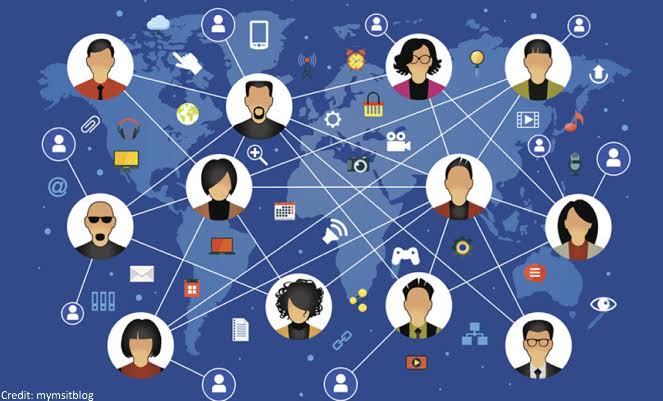
The Rise of Virtual Experiences and Online Communities reflects how people socialize, learn, play, attend events, and build identities through digital spaces. Gaming platforms, creator communities, livestreams, social VR, and private groups now support relationships that extend beyond geography.
This guide explains why virtual experiences are growing, how online communities create belonging, and where businesses, creators, educators, and entertainment companies see opportunities. It also examines moderation, privacy, safety, monetization, digital identity, accessibility, and limits of replacing interaction with online connection.
What Are Virtual Experiences and Online Communities?
A virtual experience is an activity primarily experienced through a digital platform rather than requiring everyone to be physically present in the same location.
Examples include:
- multiplayer games;
- livestreams;
- virtual concerts;
- online conferences;
- digital classrooms;
- social VR spaces;
- creator livestreams;
- interactive fandom events.
An online community is a group of people who regularly communicate around a shared interest, identity, activity, profession, creator, product, or goal.
Communities can exist through:
- Discord servers;
- gaming platforms;
- social media groups;
- forums;
- membership platforms;
- learning communities;
- professional networks.
The most important shift is that online participation is becoming more social and interactive rather than simply consuming information from a screen.
Read More: How Digital Platforms Are Changing Entertainment
Virtual Experiences and Online Communities at a Glance
| Trend | What Is Changing | Main Effect |
|---|---|---|
| Gaming communities | Games become social spaces | Play and communication merge |
| Creator communities | Audiences interact directly with creators | Stronger fan relationships |
| Virtual events | Participation no longer requires travel | Wider geographic access |
| Social VR | Users meet inside immersive environments | Stronger sense of presence |
| Private communities | Smaller interest-based groups grow | Deeper interaction |
| Digital identity | Avatars and profiles represent users | More self-expression |
| Membership models | Communities become monetizable | Recurring creator revenue |
| AI personalization | Experiences adapt to individuals | More relevant interactions |
| Cross-platform fandom | Communities move between services | Always-on engagement |
| Safety systems | Platforms increase moderation controls | Greater governance needs |
1. People Are Building Relationships Around Interests Instead of Location
Traditional communities were often shaped heavily by geography.
People connected through:
- neighborhoods;
- schools;
- workplaces;
- local clubs;
- religious institutions;
- sports organizations.
Digital platforms allow people with highly specific interests to find one another regardless of location.
A person interested in:
- independent filmmaking;
- a particular video game;
- rare car restoration;
- programming;
- an artist;
- a television franchise
can join a global community almost immediately.
Discord describes its Community Servers as spaces where people from around the world can connect, share, and learn around common interests.
Geography still matters in daily life, but it no longer determines every community available to someone.
2. Gaming Platforms Are Becoming Social Environments
Gaming is one of the clearest examples of virtual experiences becoming communities.
Modern games increasingly provide more than gameplay.
Players may use them to:
- socialize;
- coordinate with friends;
- attend events;
- create content;
- build virtual spaces;
- participate in communities.
Roblox described itself in February 2026 as an immersive gaming and creation platform serving 144 million daily users worldwide. The company emphasizes collaborative play, creation, and social interaction rather than purely passive consumption.
Social Interaction Can Increase Engagement
Discord reported in 2026 that it had more than 90 million daily active users and said players using voice channels played games on more days than users without that social interaction.
This illustrates an important shift:
A game is no longer necessarily the entire product.
The community around the game can become part of the experience that keeps people returning.
3. Online Communities Extend Entertainment Beyond the Content
Watching a television series, following an artist, or playing a game is increasingly only the beginning of the experience.
Fans may continue engaging through:
- discussion groups;
- creator videos;
- memes;
- merchandise;
- podcasts;
- game communities;
- fan art;
- livestreams.
Deloitte’s 2026 Digital Media Trends research found that 55% of self-identified fans said their enthusiasm for a show, artist, or franchise often led them to interact with it across multiple platforms. That figure rose to roughly 70% among Gen Z and millennial fans.
Communities Keep Fandom Active
Traditional entertainment marketing often focuses on major moments such as:
- film releases;
- season premieres;
- game launches;
- concerts.
Online communities keep discussion active between those events.
That creates what can effectively become an always-on fandom.
4. Social Media Is Becoming a Discovery Engine for Communities
People often discover communities before intentionally searching for them.
A short video, recommendation, livestream, or comment may introduce someone to:
- a creator;
- fandom;
- hobby;
- online game;
- professional group.
Deloitte reported in 2026 that 52% of surveyed entertainment fans said social media was the primary way they discovered new entertainment content, while 46% said they engaged with fandom-related creator content.
Discovery therefore increasingly happens through people and communities rather than traditional advertising alone.
5. Virtual Experiences Are Becoming More Interactive
Early internet content was often largely one-directional.
A publisher posted something.
The audience read or watched it.
Today’s virtual experiences can allow users to:
- comment;
- vote;
- speak;
- play;
- collaborate;
- remix;
- create;
- purchase;
- participate live.
This creates a different relationship between the audience and the experience.
A livestream can include real-time chat.
A gaming event can allow participants to influence what happens.
A virtual classroom can include collaborative work rather than only recorded lectures.
The user increasingly becomes a participant rather than simply an observer.
6. Virtual Reality Adds a Greater Sense of Presence
Not every virtual experience requires a VR headset.
Most online communities still operate through phones, computers, and consoles.
However, virtual reality can create a stronger sense of occupying the same digital space as another person.
VR environments can allow users to:
- talk using spatial audio;
- interact through avatars;
- watch content together;
- play games;
- explore digital environments.
Meta’s Horizon environment, for example, has been developed around social spaces where users can meet friends, explore experiences, and launch multiplayer activities together.
VR Is Only One Part of the Trend
The rise of online communities should not be confused with universal VR adoption.
Discord, Roblox, livestreaming, social media, and creator communities demonstrate that virtual social interaction can grow without immersive headsets.
The broader trend is digital presence, not one specific device.
7. Digital Identity Is Becoming More Important
People present themselves differently depending on the digital environment.
Digital identity can include:
- usernames;
- avatars;
- profile pictures;
- badges;
- achievements;
- virtual clothing;
- community roles.
In some spaces, an avatar becomes an important form of self-expression.
Gaming platforms and social virtual worlds increasingly allow users to customize how they appear to others.
Digital identity can also communicate:
- community status;
- experience;
- membership;
- achievements.
This creates opportunities for creativity while raising questions about privacy, impersonation, and identity verification.
8. Creators Are Building Communities, Not Just Audiences
There is an important difference between an audience and a community.
An audience primarily consumes.
A community also interacts with one another.
Creator-led businesses increasingly encourage followers to:
- join private groups;
- attend livestreams;
- participate in discussions;
- submit questions;
- vote on ideas;
- attend virtual events.
This can strengthen relationships between creators and followers.
Deloitte’s 2026 research found that 33% of surveyed consumers reported feeling a stronger personal connection to social-media creators than to television personalities or actors.
That does not mean creators replace traditional celebrities, but it demonstrates how direct digital interaction can change perceived relationships.
9. Smaller Private Communities Can Feel More Valuable
Large public social networks maximize reach.
Smaller communities can maximize relevance.
Private or semi-private communities often revolve around:
- professional interests;
- paid memberships;
- hobbies;
- courses;
- creators;
- games;
- support groups.
Members may recognize one another and interact repeatedly rather than encountering an endless stream of strangers.
That can create stronger social ties.
Size Is Not the Only Measure of Success
A community with 2,000 highly active members may provide more value than a social account with 200,000 passive followers.
Useful community metrics can include:
- active members;
- returning participants;
- conversations started;
- event attendance;
- retention.
Follower count alone does not measure community strength.
10. Online Communities Are Becoming Commercial Ecosystems
Communities can create direct business opportunities.
Revenue models can include:
- memberships;
- subscriptions;
- digital goods;
- virtual items;
- event tickets;
- sponsorships;
- merchandise;
- courses.
Community Can Increase Retention
A customer who interacts regularly with other customers may develop a stronger relationship with the overall brand.
This can be particularly relevant for:
- software;
- games;
- fitness;
- education;
- entertainment.
Community therefore can become part of the product rather than only a marketing channel.
11. Virtual Goods Have Created Digital Economies
People increasingly spend money on items that exist primarily inside digital environments.
Examples can include:
- avatar clothing;
- game items;
- virtual currencies;
- cosmetic upgrades;
- creator products.
Their value may come from:
- identity;
- status;
- personalization;
- entertainment.
This demonstrates that digital ownership and physical ownership satisfy different needs.
A virtual item may have little practical function outside the platform but still be valuable to someone because it changes how they participate inside that environment.
12. Online Events Reduce Geographic Barriers
Physical events require participants to travel.
Virtual events can allow people to attend from almost anywhere with sufficient connectivity.
Examples include:
- webinars;
- conferences;
- workshops;
- product launches;
- fan events;
- virtual concerts.
Advantages Include
- lower travel costs;
- international participation;
- recorded sessions;
- easier accessibility for some participants;
- larger potential audiences.
Virtual formats can be especially useful when information sharing is more important than physical interaction.
13. Physical Events Still Provide Something Different
Virtual events do not make physical events obsolete.
In-person experiences offer:
- spontaneous conversations;
- physical presence;
- sensory experiences;
- stronger environmental immersion.
A useful future model may therefore be hybrid.
For example, a conference could provide:
- physical attendance;
- livestreamed sessions;
- online networking;
- recorded presentations;
- a post-event community.
The digital experience extends the physical event instead of replacing it.
14. Online Learning Is Becoming More Community-Oriented
Online education originally relied heavily on recorded lessons.
Increasingly, successful learning experiences combine educational material with:
- discussion;
- live sessions;
- accountability groups;
- peer feedback;
- community challenges.
This solves one weakness of purely self-paced online education: isolation.
A learner can ask questions, compare progress, and interact with people solving similar problems.
The community can therefore become part of the educational product.
15. Remote Work Has Normalized Digital Communities
Professional relationships increasingly exist partially online.
Remote and hybrid teams may communicate through:
- messaging platforms;
- video calls;
- project systems;
- professional communities.
Professional online groups also allow people outside the same company to exchange:
- advice;
- job opportunities;
- resources;
- industry news.
This is another example of professional identity becoming less dependent on physical workplace location.
16. Online Communities Can Support Niche Interests
Traditional mass media needed large audiences to justify distribution.
Digital communities can survive around much smaller interests.
A niche group may focus on:
- vintage cameras;
- specialist software;
- one video game;
- obscure music genres;
- specific crafts;
- particular professions.
The internet makes the economics of niche communities more practical because the audience can be geographically distributed.
Thousands of people scattered across the world can still form a viable group when the cost of connecting them is low.
17. Community Recommendations Can Influence What People Consume
Online communities increasingly influence discovery.
People frequently trust recommendations from:
- friends;
- creators;
- knowledgeable members;
- fellow fans.
Deloitte found that 46% of surveyed fans said they were more likely to engage with entertainment recommended by their fan community.
That gives communities commercial influence.
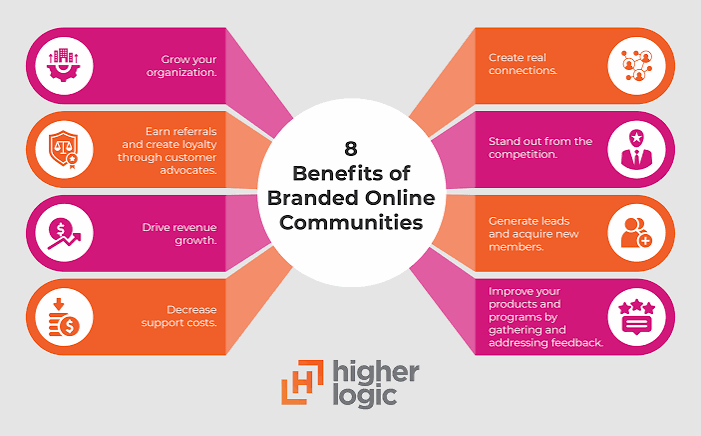
Products, games, films, and creators can grow because communities spread recommendations organically.
18. Businesses Are Creating Their Own Communities
Companies increasingly establish dedicated communities around products and services.
These spaces can provide:
- support;
- product feedback;
- educational resources;
- customer networking.
Software companies are particularly well suited to this model because users frequently help one another solve technical problems.
Community Feedback Can Improve Products
Highly engaged users may identify:
- missing features;
- usability problems;
- emerging use cases.
That feedback can help companies understand customers more deeply than transactional sales data alone.
However, businesses should not create a community unless they are prepared to manage and support it consistently.
19. Moderation Becomes Essential as Communities Grow
Every community needs rules.
Without moderation, larger communities can develop problems involving:
- harassment;
- spam;
- misinformation;
- scams;
- harmful content;
- impersonation.
Moderation can combine:
- human moderators;
- reporting tools;
- automated detection;
- age restrictions;
- account controls.
Roblox and Discord both expanded age-related and safety measures during 2026, illustrating how governance becomes more important as social platforms grow.
20. Child and Teen Safety Requires Particular Attention
Virtual environments are popular with younger users, making age-appropriate design especially important.
Roblox announced new age-based account systems in 2026 that adjust content access, communication defaults, and parental controls for users under 16.
Discord also announced an expanded teen-default experience during 2026 and continued developing age-assurance systems.
No safety system is perfect.
Parents and guardians should still understand:
- privacy settings;
- communication controls;
- purchases;
- community rules;
- reporting options.
21. Privacy Is an Important Community Issue
Online communities can collect or expose information about:
- interests;
- friendships;
- activity;
- location;
- purchases;
- messages.
Users should understand:
- what is public;
- what is private;
- what applications can access;
- how account data is used.
Discord strengthened requirements governing how third-party applications access certain server information in June 2026, including member, presence, and message-content data.
Community platforms increasingly have to balance useful integrations with privacy controls.
22. Online Communities Can Affect Wellbeing
Online communities can provide genuine benefits.
People may find:
- friendship;
- entertainment;
- learning;
- support;
- belonging.
But excessive or unhealthy participation can also create problems.
Potential concerns include:
- sleep disruption;
- harassment;
- social comparison;
- compulsive use.
Discord’s 2026 digital-wellness guidance recognizes that online community experiences can affect physical, emotional, mental, and social wellbeing.
The goal should not necessarily be to eliminate online interaction.
It should be to build healthier patterns around it.
23. Community Membership Can Create Belonging
People often remain in communities not because of a single feature but because they feel connected to other members.
That sense of belonging may come from:
- shared language;
- inside jokes;
- recurring events;
- mutual support;
- collaborative projects.
The strongest communities become valuable because of relationships between members, not simply because the platform provides technical features.
This is difficult for competitors to replicate because software can be copied more easily than social bonds.
24. AI Could Make Virtual Experiences More Personalized
Artificial intelligence may change virtual communities in several ways.
AI can potentially support:
- recommendations;
- moderation;
- translation;
- personalized summaries;
- content creation;
- virtual characters.
Deloitte’s 2026 research found that almost 30% of surveyed entertainment fans wanted AI-generated personalized digests or highlight reels, while 22% said better AI recommendations could increase their streaming use.
AI Also Creates Risks
Communities need to distinguish appropriately between:
- human users;
- automated accounts;
- AI-generated content.
AI can improve participation but can also make spam, impersonation, and misinformation easier to produce.
25. The Future Is Likely Cross-Platform
Users rarely remain inside one platform.
A fan might:
- discover something through social media;
- watch it on a streaming service;
- join a Discord community;
- play an associated game;
- buy merchandise.
Deloitte’s 2026 industry outlook notes that audiences increasingly move across platforms and formats rather than keeping their entertainment activity inside one service.
This means successful communities may be ecosystems rather than individual websites.
Benefits of Virtual Experiences and Online Communities
Access
People can participate without being physically nearby.
Belonging
Niche interests can support active communities.
Creativity
Users can build, remix, and contribute content.
Learning
Members can share expertise and provide peer support.
Business Opportunities
Creators and companies can monetize memberships and digital products.
Global Reach
A community can include participants from multiple countries.
Continued Engagement
People can remain connected between events, releases, or purchases.
Challenges of Virtual Communities
Moderation
Large communities require active governance.
Privacy
Platforms can collect significant behavioral data.
Harassment
Digital communication can make abuse easier to scale.
Platform Dependence
A community relying entirely on one service is vulnerable to platform changes.
Digital Fatigue
Constant online interaction can become exhausting.
Accessibility
Not everyone has equal access to high-speed internet or suitable devices.
Fragmentation
Users may need multiple accounts and platforms to follow different communities.
How to Build a Healthy Online Community
1. Define the Purpose
People should understand why the community exists.
2. Create Clear Rules
Set expectations for behavior early.
3. Encourage Member-to-Member Interaction
A community should not depend entirely on administrators posting content.
4. Moderate Consistently
Enforce rules predictably.
5. Protect Privacy
Collect only information necessary for the experience.
6. Create Recurring Activities
Examples include:
- live discussions;
- challenges;
- workshops;
- gaming sessions;
- Q&A events.
7. Measure Quality, Not Just Size
Look beyond member count.
Track:
- active participation;
- retention;
- event attendance;
- helpful interactions.
How Businesses Can Use Virtual Communities
Businesses should begin with a specific purpose.
Good reasons might include:
- customer education;
- support;
- networking;
- product feedback;
- fandom.
Do not create a community merely because competitors have one.
A neglected community can make a brand appear less active rather than more engaged.
Frequently Asked Questions
Why are virtual experiences becoming more popular?
They reduce geographic barriers, allow real-time participation, support niche interests, and integrate naturally with gaming, entertainment, education, and social communication.
What is an online community?
An online community is a group of people who regularly interact digitally around a shared interest, identity, profession, product, creator, or goal.
Are online communities replacing real-world communities?
Not necessarily. Digital communities often supplement physical relationships rather than replace them. Many people move between online and offline social environments depending on their needs.
Why are gaming platforms important to online communities?
Gaming provides both an activity and a reason to socialize. Platforms such as Roblox and Discord demonstrate how gaming, communication, creation, and community can exist within interconnected digital environments.
Are virtual experiences only about VR?
No. Virtual experiences include livestreams, multiplayer games, online classes, digital events, creator communities, forums, and social platforms. VR is only one form.
Can businesses benefit from online communities?
Yes. Communities can support customer education, loyalty, feedback, support, memberships, and product discovery. They require ongoing moderation and useful participation to remain valuable.
What are the biggest risks of online communities?
Key risks include harassment, privacy loss, scams, misinformation, unhealthy usage patterns, weak moderation, and excessive dependence on a single platform.
What makes an online community successful?
Successful communities normally have a clear purpose, active members, consistent moderation, recurring interaction, useful content, and enough trust for participants to contribute rather than simply observe.
Conclusion
The Rise of Virtual Experiences and Online Communities reflects a broader change in how people form relationships, consume entertainment, learn, play, and participate in shared interests. Gaming platforms, creator communities, digital events, and social spaces allow meaningful interaction without requiring geographic proximity.

1 Comment
Pingback: Cybersecurity Basics for Safer Online Browsing