

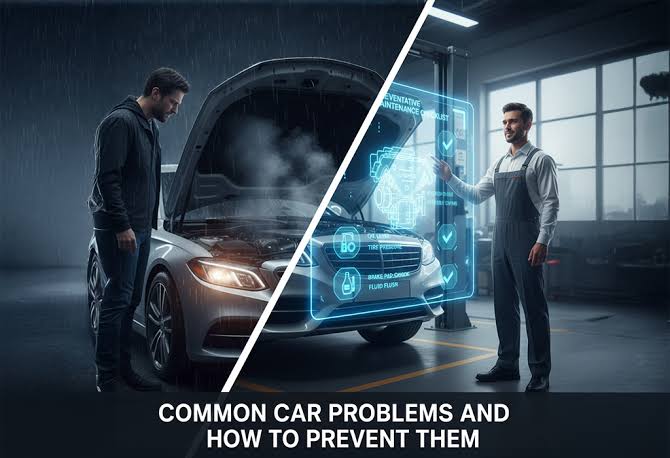
Common Car Problems and How to Prevent Them is an important topic for drivers who want safer, more reliable, and less expensive vehicle ownership. Many breakdowns begin with small warning signs, neglected maintenance, worn components, or issues that could have been corrected earlier.
This article explains frequent car problems, what usually causes them, how to recognize early symptoms, and practical ways to reduce the risk. It covers batteries, brakes, tires, overheating, fluids, suspension, electrical faults, starting problems, and preventive maintenance.
Why Preventive Car Maintenance Matters
Cars contain thousands of mechanical, electrical, and electronic components working together. Normal wear is unavoidable, but many unexpected failures can be reduced through regular inspection and timely maintenance.
Preventive maintenance helps drivers identify problems before they become more serious.
It can also support:
- Safer driving
- More reliable starting
- Better fuel efficiency
- Longer component life
- More predictable repair costs
- Improved vehicle performance
- Reduced risk of roadside breakdowns
The appropriate maintenance schedule depends on the vehicle, engine, mileage, age, climate, and driving conditions. Always use the manufacturer’s service schedule as the primary reference.
Read More: Future of Electric Vehicles and Sustainable Driving
1. Dead or Weak Car Battery
Battery problems are among the most common reasons a vehicle fails to start.
A battery can weaken with age, repeated short journeys, extreme temperatures, electrical problems, or prolonged periods without driving.
Common Signs of a Weak Battery
Watch for:
- Slow engine cranking
- Clicking when starting
- Dim interior or exterior lights
- Electrical accessories behaving unusually
- Battery warning messages
- A vehicle that does not start
A no-start condition does not always mean the battery itself has failed. Problems with the starter, alternator, wiring, terminals, or other electrical components can produce similar symptoms.
How to Prevent Battery Problems
Check the battery periodically for:
- Loose connections
- Corrosion around terminals
- Physical damage
- Poor mounting
If the vehicle is rarely driven, occasional longer journeys or an appropriate battery maintainer may help keep the battery charged.
Have an ageing battery tested if starting becomes noticeably slower.
2. Alternator Problems
The alternator generates electricity while the engine is running and helps maintain the battery’s charge.
If it stops working correctly, the vehicle may continue running temporarily using stored battery energy before eventually shutting down.
Warning Signs of Alternator Trouble
Symptoms can include:
- Battery warning light
- Flickering headlights
- Weak electrical accessories
- Unusual noises
- Repeated battery discharge
- Vehicle stalling
Because battery and alternator symptoms can overlap, testing the charging system is often necessary before replacing parts.
How to Reduce the Risk
Routine inspections can identify damaged belts, poor connections, or charging-system problems before complete failure.
If the battery repeatedly goes flat despite being in good condition, have the charging system professionally checked.
3. Engine Overheating
An overheating engine can cause serious damage if ignored.
The cooling system controls engine temperature using components such as coolant, hoses, a radiator, thermostat, water pump, cooling fans, and related sensors.
Problems with any of these components can contribute to overheating.
Warning Signs
Possible symptoms include:
- Temperature gauge rising unusually high
- Temperature warning light
- Steam from the engine area
- Coolant smell
- Coolant leaks
- Reduced engine performance
What to Do if the Engine Overheats
Continuing to drive an overheating vehicle can worsen the problem.
Move to a safe location and switch off the engine when appropriate. Do not open a hot cooling system because pressurized coolant can cause severe burns.
If the cause is uncertain, arrange professional inspection or roadside assistance.
How to Prevent Overheating
Regularly check:
- Coolant level when the engine is cool
- Visible hoses
- Coolant leaks
- Radiator condition
- Cooling fan operation when problems are suspected
Replace coolant according to the manufacturer’s specified schedule and use the correct coolant type.
4. Engine Oil Problems
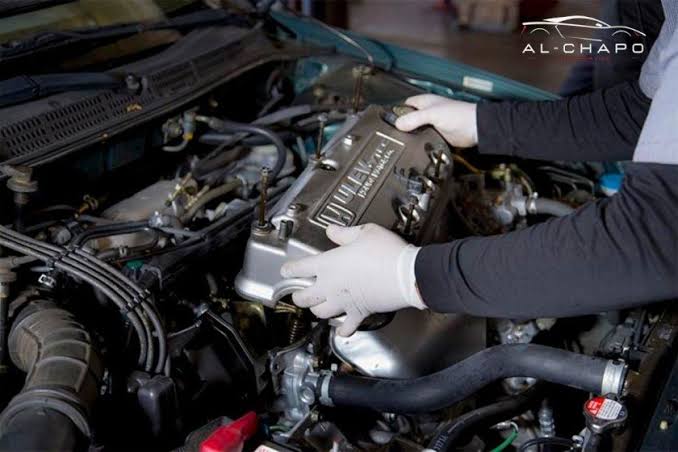
Engine oil lubricates moving components and helps manage heat and contamination.
Running with insufficient, incorrect, or badly degraded oil can increase engine wear.
Common Oil-Related Problems
These include:
- Low oil level
- Oil leaks
- Incorrect oil specification
- Delayed oil changes
- Excessive oil consumption
Warning Signs
Look for:
- Oil pressure warning light
- Oil beneath the vehicle
- Burning-oil smell
- Unusual engine noise
- Falling oil level between services
An oil-pressure warning can indicate a serious lubrication problem and should not be treated as a routine reminder.
Prevention
Check the oil level according to the instructions in the owner’s manual.
Use the correct oil grade and specification, and follow the manufacturer’s oil-change interval.
If the engine regularly loses oil, investigate the cause rather than simply continuing to top it up indefinitely.
5. Tire Wear and Tire Pressure Problems
Tires directly affect braking, steering, stability, ride quality, and efficiency.
Incorrect pressure or excessive wear can reduce safety.
Common Tire Problems
Drivers may experience:
- Low pressure
- Overinflation
- Uneven wear
- Punctures
- Sidewall damage
- Cracking
- Wheel imbalance
Uneven Tire Wear Can Reveal Other Problems
Uneven wear may be associated with:
- Incorrect tire pressure
- Alignment problems
- Worn suspension components
- Wheel imbalance
- Driving habits
How to Prevent Tire Problems
Regularly inspect:
- Tire pressure
- Tread condition
- Sidewalls
- Embedded objects
- Uneven wear
Use the tire pressures specified by the vehicle manufacturer rather than the maximum pressure printed on the tire sidewall.
Also inspect the spare tire where one is fitted.
6. Wheel Alignment Problems
Wheel alignment determines how the wheels are positioned relative to the vehicle and road.
Poor alignment can increase tire wear and affect handling.
Signs of Poor Alignment
Possible signs include:
- Vehicle pulling to one side
- Steering wheel sitting off-center
- Uneven tire wear
- Unusual steering behavior
Alignment can be affected by impacts with potholes or curbs, accidents, or worn suspension components.
Prevention
Avoid severe road impacts where possible and have the alignment inspected if steering behavior changes or unusual tire wear appears.
Replacing tires without correcting an underlying alignment problem can cause the new tires to wear prematurely.
7. Brake Problems
The braking system is one of the most important safety systems in a vehicle.
Brake components gradually wear and should never be ignored when symptoms appear.
Common Brake Warning Signs
These may include:
- Squealing
- Grinding
- Steering-wheel vibration while braking
- Vehicle pulling during braking
- Soft or unusual brake-pedal feel
- Longer stopping distance
- Brake warning lights
Not every noise indicates the same problem, so inspection is necessary for an accurate diagnosis.
How to Prevent Brake Problems
Have brakes inspected during routine servicing and whenever braking behavior changes.
Avoid ignoring grinding noises. They can indicate that friction material has worn significantly and other braking components may be affected.
Brake fluid should also be inspected and replaced according to the vehicle manufacturer’s schedule.
8. Worn Brake Pads
Brake pads are designed to wear gradually as they create friction against the brake discs or rotors.
The rate of wear varies considerably depending on:
- Vehicle weight
- Driving style
- Road conditions
- Traffic
- Brake design
- Pad material
There is therefore no universal mileage at which every car needs new brake pads.
Routine inspection is more reliable than assuming they will last a specific distance.
9. Transmission Problems
The transmission transfers engine or motor power to the wheels.
Problems can become expensive when warning signs are ignored.
Possible Transmission Symptoms
Depending on transmission type, drivers may notice:
- Delayed engagement
- Harsh shifting
- Slipping
- Shuddering
- Unusual noises
- Fluid leaks
- Warning lights
Modern automatic, dual-clutch, continuously variable, and manual transmissions operate differently, so symptoms and service requirements vary.
How to Reduce Transmission Problems
Follow the manufacturer’s maintenance requirements.
Where transmission-fluid servicing is specified, use the correct fluid and procedure.
Also address fluid leaks promptly.
Avoid assuming that every transmission fluid must be changed at the same interval because service schedules differ between vehicles.
10. Starter Motor Problems
The starter motor turns the engine when the driver starts the vehicle.
A failing starter can produce symptoms similar to battery problems.
Common Symptoms
These may include:
- Clicking without engine cranking
- Intermittent starting
- Slow cranking despite a healthy battery
- No response when attempting to start
Diagnosis should include the battery, cables, electrical connections, starter circuit, and charging system before the starter itself is condemned.
11. Spark Plug Problems
Petrol engines typically use spark plugs to ignite the air-fuel mixture.
Worn or contaminated spark plugs can affect combustion.
Possible symptoms include:
- Difficult starting
- Rough idle
- Misfires
- Reduced acceleration
- Higher fuel consumption
- Check-engine light
Prevention
Replace spark plugs according to the manufacturer’s maintenance schedule using the correct specification.
Do not assume poor running is automatically caused by spark plugs. Fuel delivery, ignition coils, sensors, air leaks, and mechanical problems can create similar symptoms.
12. Check-Engine Light
The check-engine light can appear for many reasons.
Some causes are relatively minor, while others require urgent attention.
Potential causes may involve:
- Engine sensors
- Ignition system
- Fuel system
- Emissions equipment
- Air intake
- Electrical circuits
Solid vs Flashing Warning
Vehicle behavior varies by manufacturer, but a flashing check-engine light can indicate a more serious fault, often involving active misfiring.
Consult the owner’s manual and seek diagnosis promptly.
Do not attempt to identify the problem solely by guessing from the warning light.
Diagnostic trouble codes provide useful direction, but they do not always prove that the named component itself needs replacement.
13. Fuel System Problems
A vehicle needs consistent fuel delivery for proper operation.
Problems can involve:
- Fuel pump
- Injectors
- Filters
- Pressure regulation
- Contaminated fuel
- Related electrical components
Symptoms may include:
- Difficult starting
- Hesitation
- Loss of power
- Poor acceleration
- Engine misfires
- Stalling
Prevention
Use appropriate fuel for the vehicle and follow the manufacturer’s service requirements.
Avoid repeatedly running the vehicle extremely low on fuel if the manufacturer advises against it.
If performance changes noticeably after refueling, contaminated or incorrect fuel may be one possibility requiring investigation.
14. Air Filter Problems
The engine air filter helps prevent dirt and debris from entering the intake system.
As it becomes dirty, airflow can eventually be restricted.
The required replacement interval depends heavily on operating conditions.
Vehicles driven in dusty environments may require more frequent inspection.
Use the service schedule and actual filter condition rather than relying on one universal interval.
15. Suspension Problems
Suspension components help control vehicle movement while maintaining tire contact with the road.
Typical components can include:
- Springs
- Shock absorbers
- Struts
- Control arms
- Bushings
- Ball joints
- Links
Signs of Suspension Wear
Drivers may notice:
- Excessive bouncing
- Clunking noises
- Poor handling
- Uneven tire wear
- Vehicle leaning
- Steering instability
- Uncomfortable ride quality
Prevention
Suspension components naturally wear, so they cannot be protected indefinitely.
However, regular inspections and avoiding severe pothole impacts can help identify or reduce damage.
Unusual noises should be inspected before worn parts affect other components.
16. Steering Problems
Steering issues can significantly affect vehicle safety.
Symptoms can include:
- Excessive steering effort
- Unusual looseness
- Vibration
- Clicking
- Pulling
- Fluid leaks on vehicles using hydraulic power steering
Modern cars may use hydraulic, electric, or electro-hydraulic assistance, so diagnostic procedures vary.
Any sudden or significant change in steering behavior deserves prompt inspection.
17. Exhaust System Problems
The exhaust system carries combustion gases away from the engine and helps control noise and emissions.
Potential problems include:
- Corrosion
- Cracks
- Loose components
- Damaged mounts
- Catalytic-converter problems
- Exhaust leaks
Warning Signs
Possible symptoms include:
- Louder exhaust sound
- Rattling
- Unusual smells
- Reduced engine performance
- Warning lights
Exhaust gases can be dangerous, particularly if they enter the passenger compartment.
Suspected exhaust leaks should be investigated promptly.
18. Air-Conditioning Problems
Air conditioning may gradually become less effective due to refrigerant leaks, compressor problems, electrical faults, blocked airflow, or other system failures.
Common Symptoms
These include:
- Weak cooling
- No cooling
- Unusual smells
- Unusual noises
- Weak airflow
Simply adding refrigerant repeatedly is not a proper solution when the system has a leak.
The cause should be diagnosed.
19. Electrical Problems
Modern vehicles rely heavily on electronics.
Electrical faults can affect systems ranging from lights and windows to engine management and safety equipment.
Common causes include:
- Weak battery
- Damaged wiring
- Corroded connections
- Failed switches
- Faulty relays
- Blown fuses
- Sensor problems
- Control-module issues
Prevention
Keep the battery and charging system in good condition.
Avoid poorly installed electrical accessories, which can create wiring problems or excessive current draw.
When replacing a fuse, use the correct rating. A repeatedly blown fuse indicates a problem that requires diagnosis.
20. Blown Bulbs and Lighting Problems
Headlights, brake lights, turn signals, and other external lights are essential for visibility and communication with other road users.
Check exterior lighting regularly.
A lighting problem may be caused by:
- Failed bulb
- Fuse
- Wiring
- Connector
- Switch
- LED module
- Control system
Modern LED lighting assemblies can be more complex than conventional replaceable bulbs.
21. Windshield Wiper Problems
Wipers are inexpensive compared with many vehicle components but are essential during poor weather.
Common problems include:
- Streaking
- Skipping
- Cracked rubber
- Poor contact with the glass
- Weak washer spray
Replace worn blades when they can no longer clear the windshield effectively.
Also maintain suitable washer fluid and inspect washer jets if spray becomes weak or uneven.
22. Fluid Leaks
Cars use several different fluids depending on their design.
Potential leaks can involve:
- Engine oil
- Coolant
- Brake fluid
- Transmission fluid
- Power-steering fluid on applicable vehicles
- Washer fluid
Not every liquid found under a vehicle is a fault. Clear water from air-conditioning condensation can be normal.
However, colored, oily, strongly scented, or recurring fluid leaks deserve investigation.
23. Unusual Engine Noises
New noises can provide early warning of mechanical problems.
Examples include:
- Knocking
- Ticking
- Squealing
- Grinding
- Rattling
Do not rely solely on the sound to diagnose the problem.
Different faults can produce similar noises.
Pay attention to when the sound occurs:
- At startup
- During acceleration
- While braking
- While turning
- Over bumps
- At idle
This information can help a technician locate the cause.
24. Poor Fuel Economy
A noticeable decline in fuel economy can have many causes.
Possible factors include:
- Tire pressure
- Driving style
- Heavy traffic
- Short journeys
- Vehicle load
- Weather
- Air-conditioning use
- Mechanical problems
- Engine-management faults
Do not assume a single component is responsible.
Compare fuel consumption over several similar journeys before concluding that the vehicle has developed a fault.
25. Engine Misfires
A misfire occurs when combustion does not occur correctly in one or more cylinders of a combustion engine.
Possible causes can include:
- Ignition problems
- Fuel-delivery issues
- Air leaks
- Sensor faults
- Mechanical problems
Symptoms may include:
- Rough running
- Loss of power
- Shaking
- Check-engine light
- Poor fuel economy
Persistent misfires should be diagnosed promptly because they can affect performance and potentially damage emissions-control components.
26. Timing Belt or Timing Chain Problems
Combustion engines use timing systems to coordinate internal engine components.
Some engines use timing belts, while others use chains or other arrangements.
Timing-belt replacement intervals vary significantly by vehicle.
Ignoring a required belt replacement can lead to serious engine damage on certain engine designs.
Prevention
Check your owner’s manual or manufacturer maintenance schedule.
Do not use a generic replacement interval taken from an unrelated vehicle.
Timing chains may not have routine replacement intervals on many vehicles, but they can still develop problems related to wear, lubrication, tensioners, or guides.
27. Cooling-System Leaks
Small coolant leaks can gradually become major problems.
Leaks may develop around:
- Hoses
- Radiator
- Water pump
- Expansion tank
- Connections
- Seals
Signs include falling coolant level, visible residue, overheating, or a distinctive coolant smell.
Repeatedly adding coolant without finding the leak can allow the underlying problem to worsen.
28. Wheel Bearing Problems
Wheel bearings allow wheels to rotate smoothly while supporting vehicle loads.
A worn bearing may produce:
- Humming
- Growling
- Grinding
- Noise that changes with speed or cornering
Because tire noise and other drivetrain components can produce similar sounds, proper diagnosis is important.
Damaged bearings should not be ignored because severe wear can affect wheel stability.
29. Engine Mount Problems
Engine and transmission mounts secure the powertrain while helping isolate vibration.
When mounts deteriorate, drivers may notice:
- Excessive vibration
- Clunking
- Movement during acceleration
- Unusual noise during gear engagement
Wear can develop gradually, making the problem easy to overlook until vibrations become obvious.
30. Clogged or Restricted Filters
Vehicles can use several filters, including:
- Engine air filters
- Cabin air filters
- Oil filters
- Fuel filters on applicable systems
Different filters have different replacement requirements.
A cabin filter may affect ventilation performance, while a severely restricted engine air filter can affect airflow.
Follow vehicle-specific maintenance schedules rather than replacing every filter at the same interval.
Preventive Maintenance Checklist
A simple inspection routine can help identify problems early.
| Area | What to Check |
|---|---|
| Engine oil | Correct level and visible leaks |
| Coolant | Correct level when cold and signs of leakage |
| Tires | Pressure, tread and damage |
| Brakes | Noise, vibration and pedal behavior |
| Battery | Starting performance and terminal condition |
| Lights | Headlights, brake lights and indicators |
| Wipers | Blade condition and washer operation |
| Fluids | Levels and unexplained leaks |
| Suspension | New noises or changes in handling |
| Warning lights | Investigate unexpected warnings promptly |
This checklist does not replace the manufacturer’s scheduled servicing.
Maintenance Habits That Can Prevent Expensive Repairs
Follow the Manufacturer’s Service Schedule
Modern vehicles have different maintenance requirements.
Use the owner’s manual or official service information rather than relying on universal mileage rules.
Check Warning Lights Promptly
A warning light is easier to investigate before a breakdown occurs.
Avoid Ignoring New Noises
A small mechanical problem can sometimes cause damage to neighboring components if allowed to continue.
Inspect Tires Regularly
Tire problems can affect safety, efficiency, and suspension components.
Respond to Leaks
Identify unexplained fluid loss rather than repeatedly topping up the system.
Keep Maintenance Records
Records help track servicing, identify recurring problems, and provide useful information when selling the vehicle.
Use Correct Parts and Fluids
Incorrect oil, coolant, transmission fluid, filters, or other components can create new problems.
Vehicle specifications should take priority over generic recommendations.
Warning Signs You Should Not Ignore
Some symptoms deserve particularly prompt attention.
Seek inspection if you notice:
- Oil-pressure warning
- Overheating
- Significant brake changes
- Major steering changes
- Persistent engine misfire
- Smoke
- Strong fuel smell
- Rapid fluid loss
- Repeated stalling
- Severe vibration
- Flashing warning lights
- Loud grinding noises
If the vehicle appears unsafe to drive, use roadside assistance rather than continuing the journey.
Why Regular Inspections Can Save Money
Preventive maintenance does not guarantee that a vehicle will never fail.
Mechanical parts eventually wear and unexpected defects can occur.
The financial advantage comes from identifying deterioration before secondary damage develops.
For example:
A small cooling-system leak may initially require a hose or seal repair.
Ignoring the leak can eventually allow severe overheating, potentially creating a much more expensive engine problem.
Similarly, replacing worn brake pads at the appropriate time can prevent additional damage caused by allowing friction material to wear excessively.
Early diagnosis often provides more repair options.
Maintenance Requirements Change as Cars Age
A newer vehicle and a high-mileage vehicle may require different levels of attention.
As cars age, components such as:
- Rubber hoses
- Bushings
- Seals
- Suspension parts
- Electrical connectors
- Engine mounts
can deteriorate.
Older vehicles may therefore benefit from more frequent visual inspections even when they continue following the standard service schedule.
Mileage is not the only factor.
Time, climate, storage conditions, road quality, and driving environment also influence deterioration.
Does Driving Style Affect Car Problems?
Yes.
Driving behavior influences several wear components.
Repeated hard acceleration, aggressive braking, severe pothole impacts, excessive loads, and poor clutch technique in manual vehicles can increase wear.
Smooth driving can reduce unnecessary stress on:
- Brakes
- Tires
- Transmission components
- Suspension
- Engine and drivetrain
This does not mean a car must always be driven slowly.
It means avoiding unnecessary mechanical stress.
Short Trips Can Be Hard on Some Vehicles
Frequent short journeys can be demanding because the engine and related systems may repeatedly operate before reaching normal operating temperature.
Short trips can also reduce the opportunity for the charging system to restore energy used during starting.
For certain modern diesel vehicles, driving patterns can also influence emissions-system operation.
Owners should understand the requirements of their particular vehicle rather than assuming every powertrain behaves the same way.
How Often Should You Service Your Car?
There is no correct universal service interval.
Service frequency depends on:
- Vehicle manufacturer
- Model
- Engine
- Age
- Mileage
- Driving conditions
- Service system
Some vehicles use fixed time or mileage intervals, while others use condition-based servicing.
Always follow the official maintenance schedule for the specific vehicle.
Vehicles used under severe conditions may require different servicing.
Frequently Asked Questions
What are the most common car problems?
Common issues include weak batteries, worn brakes, tire problems, overheating, oil leaks, electrical faults, suspension wear, starting problems, warning lights, and cooling-system failures. The frequency varies according to vehicle age, design, maintenance, and driving conditions.
What car problems can regular maintenance prevent?
Maintenance can reduce the likelihood of problems caused by low fluids, neglected oil, worn filters, poor tire pressure, deteriorated brakes, weak batteries, and overdue service items. It cannot prevent every mechanical or electronic failure.
How do I know if my car needs immediate attention?
Overheating, oil-pressure warnings, major brake or steering changes, smoke, severe vibration, strong fuel smells, rapid fluid loss, persistent misfires, or loud grinding noises should be treated seriously.
Can ignoring a warning light damage a car?
Yes, depending on the warning. Some alerts indicate problems that can lead to additional mechanical damage or safety risks. Check the owner’s manual and have unexplained warning lights diagnosed promptly.
How can I make my car last longer?
Follow the manufacturer’s maintenance schedule, use correct fluids and parts, maintain tire pressures, respond to leaks and warning signs, avoid unnecessary mechanical stress, and repair developing problems before they become more severe.
Should I repair small car problems immediately?
Not every minor issue requires emergency repair, but small faults should be diagnosed before they worsen. Fluid leaks, braking problems, overheating, steering issues, and warning lights deserve particularly prompt attention.
Is preventive maintenance cheaper than repairing breakdowns?
Preventive maintenance can reduce the risk of certain expensive failures by identifying wear and fluid problems early. It still costs money, and it cannot eliminate every unexpected repair, but it generally supports more predictable vehicle ownership.
What should I check before a long road trip?
Inspect tire condition and pressure, fluid levels, lights, wipers, battery condition if questionable, and any existing warning lights. Ensure scheduled servicing is current and address known mechanical problems before departure.
Conclusion
Understanding Common Car Problems and How to Prevent Them helps drivers identify warning signs before minor faults develop into larger repairs. Battery weakness, overheating, brake wear, tire problems, fluid leaks, electrical faults, and suspension issues are easier to manage when detected early.

1 Comment
Pingback: Latest Automotive Trends Shaping the Future of Driving