

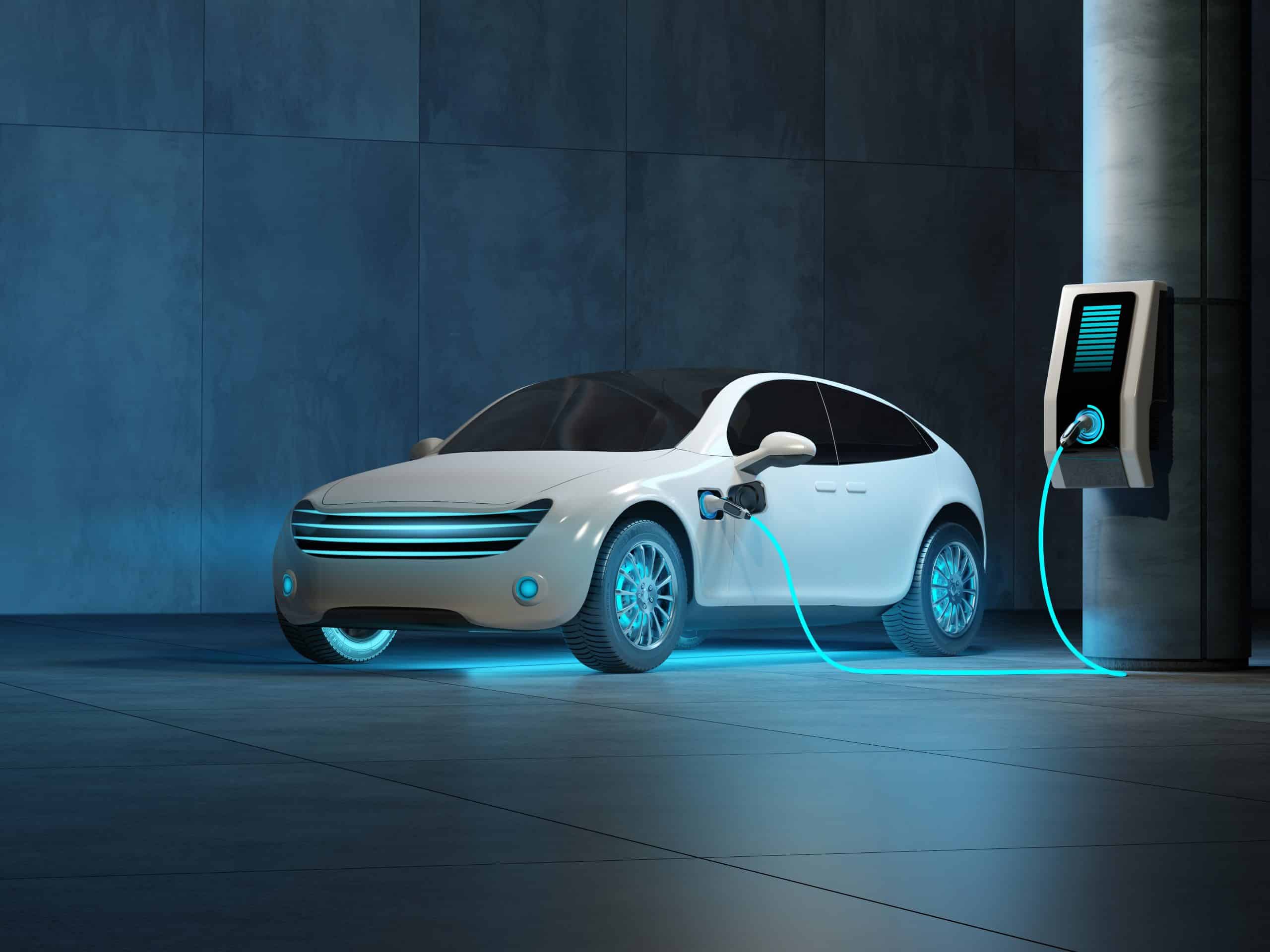
The Future of Electric Vehicles and Sustainable Driving is being shaped by rapid advances in battery technology, expanding charging networks, falling costs, and growing pressure to reduce transport emissions. Electric cars are moving from a specialist choice toward a larger share of the global vehicle market, but questions about affordability, charging access, battery materials, electricity sources, and long-term sustainability still influence adoption.
This article explains where electric mobility is heading and which technologies, infrastructure changes, and choices will shape transportation.
Why Electric Vehicles Are Becoming More Important
Electric vehicles are no longer a small experimental category within the automotive industry.
Global electric car sales exceeded 20 million in 2025, representing about one-quarter of all new cars sold worldwide, according to the International Energy Agency. The IEA expects electric cars to continue taking a larger share of global vehicle sales, although adoption rates differ significantly between regions.
Several forces are supporting this transition:
- Improving battery technology
- Falling battery manufacturing costs
- Greater model availability
- Expanding public charging
- Higher fuel-efficiency and emissions requirements
- Growing competition among automakers
- Consumer interest in lower operating costs
- Investment in renewable electricity
- Development of electric commercial vehicles
However, sustainable transportation requires more than replacing every petrol or diesel car with a battery-powered equivalent.
Vehicle size, electricity generation, battery production, public transport, driving behavior, recycling, and urban planning also matter.
Read More: Luxury Cars That Combine Performance With Comfort
What Does Sustainable Driving Actually Mean?
Sustainable driving describes transportation choices that reduce environmental impacts while remaining practical and economically viable.
Electric vehicles are an important part of this process, but sustainable driving can include several approaches:
- Choosing an efficient vehicle
- Using renewable or lower-carbon electricity where available
- Avoiding unnecessarily large vehicles
- Maintaining tires correctly
- Driving smoothly
- Combining journeys
- Using public transport where practical
- Walking or cycling for short journeys
- Sharing vehicles
- Extending vehicle life through proper maintenance
A battery electric vehicle can reduce emissions substantially compared with a conventional combustion vehicle, but its environmental impact is not zero.
Manufacturing, battery materials, electricity generation, tires, roads, and eventual recycling all contribute to the vehicle’s total footprint.
Electric Vehicle Sales Are Moving Into the Mainstream
The global EV market reached another milestone in 2025.
More than 20 million electric cars were sold worldwide, approximately 20% more than in 2024. Electric cars accounted for one in four new-car sales globally.
Adoption remains uneven.
China accounted for more than 13 million electric car sales in 2025, with EVs representing almost 55% of new-car sales. Europe recorded more than four million electric car sales, while the U.S. electric-car share remained below 10%.
The IEA projects global electric-car sales of around 23 million in 2026, equivalent to roughly 28% of total car sales, although economic conditions and policy changes could affect that outlook.
This regional variation demonstrates an important point:
There will not be one universal transition timeline.
EV adoption depends on vehicle prices, government policy, charging availability, electricity costs, consumer preferences, domestic manufacturing, and local driving patterns.
Battery Technology Will Define the Next Generation of EVs
The battery is one of the most important components of an electric vehicle.
It affects:
- Vehicle price
- Driving range
- Charging speed
- Weight
- Performance
- Energy efficiency
- Longevity
- Resale value
Battery development will therefore remain central to the future of electric transportation.
Battery Costs Are Continuing to Decline
Battery costs have fallen significantly over the past decade, helping make electric vehicles more competitive.
The IEA reports that average battery prices declined another 8% in 2025, supported by manufacturing improvements, changing battery chemistries, stronger competition, and relatively low critical-mineral prices during much of the period.
Lower battery costs can help automakers reduce vehicle prices or offer greater range and performance at similar prices.
However, battery costs remain sensitive to mineral prices, manufacturing location, chemistry, energy costs, and supply-chain conditions.
Prices can therefore fluctuate rather than decline smoothly every year.
LFP Batteries Are Becoming More Common
Lithium iron phosphate, commonly called LFP, has become increasingly important in electric vehicles.
The IEA reports that LFP batteries accounted for more than 55% of global EV battery deployment in 2025.
LFP batteries generally offer advantages such as lower material costs and reduced reliance on nickel and cobalt.
Other battery chemistries may provide advantages in areas such as energy density.
This means the future EV market will likely use several battery chemistries rather than one universal solution.
Automakers can select batteries according to the needs of each vehicle.
A compact urban EV may prioritize affordability and durability, while a premium long-range vehicle may prioritize energy density and performance.
Will Solid-State Batteries Transform Electric Cars?
Solid-state batteries receive considerable attention because they could potentially offer improvements in energy density, safety, packaging, or charging performance.
However, commercial-scale production remains more challenging than laboratory demonstrations.
Manufacturing consistency, durability, material costs, production yields, and scalability all need to be solved before solid-state batteries can become common in mass-market vehicles.
For consumers, this means there is little reason to postpone an EV purchase solely because a future battery breakthrough might arrive.
Battery technology will continue improving, but automotive technology has always evolved after people purchase vehicles.
Sodium-Ion Batteries Could Expand Affordable EV Options
Sodium-ion technology is another area receiving increasing attention.
Sodium is more abundant than lithium, and sodium-ion batteries could become useful where low cost matters more than maximum energy density.
Potential applications include:
- Small city cars
- Short-range vehicles
- Commercial fleets
- Stationary energy storage
Sodium-ion batteries are unlikely to immediately replace lithium-ion technology across every vehicle category.
Instead, different chemistries may increasingly serve different market segments.
EV Range May Matter Less as Charging Improves
Range anxiety has historically been one of the biggest concerns surrounding electric vehicles.
Modern EVs have improved substantially, but simply installing increasingly large batteries is not always the most sustainable solution.
The IEA reports that the global sales-weighted average battery-electric-car range was almost 380 kilometers in 2025 and had begun to plateau after years of growth.
Several factors explain why range may not need to increase indefinitely.
Better public charging can reduce the need to carry extremely large batteries.
Smaller batteries can potentially reduce:
- Vehicle weight
- Purchase cost
- Material requirements
- Manufacturing emissions
For many drivers, the more useful question is therefore not:
“What EV has the longest possible range?”
It is:
“How much range do I actually need for my normal driving?”
Charging Infrastructure Will Be Critical
EV adoption cannot scale without practical charging.
Home charging remains particularly convenient because vehicles can recharge while parked overnight.
However, many people live in apartments, shared housing, or locations without dedicated parking.
Public charging will therefore remain essential.
The global stock of public charging points exceeded seven million by the end of 2025 after nearly 1.8 million new points were added during the year. That represented growth of more than 33%.
Future charging networks will need to improve in several areas:
- Geographic coverage
- Reliability
- Charging speed
- Payment simplicity
- Pricing transparency
- Accessibility
- Station availability
- Grid connection capacity
Installing chargers is not enough if drivers regularly encounter broken equipment, complicated applications, or long queues.
Fast Charging Will Improve Long-Distance EV Travel
Fast charging is especially important for motorway and highway travel.
Drivers typically do not need maximum charging speed while a car sits at home overnight.
During long-distance travel, however, shorter charging stops significantly improve convenience.
The global stock of fast and ultra-fast public chargers has expanded rapidly. The IEA reported that ultra-fast chargers rated at 150 kW or higher grew strongly during 2024, while charging infrastructure continued expanding in 2025.
Future improvement will come from both:
- Higher vehicle charging capability
- Better charging infrastructure
However, peak charging power alone does not determine charging time.
Battery temperature, charging curve, state of charge, charger capability, and battery management software all affect real-world performance.
Home Charging Will Remain Important
For drivers with private parking, home charging can make EV ownership fundamentally different from operating a combustion vehicle.
Instead of visiting a fuel station, the driver can begin many mornings with a charged battery.
Home charging can also allow drivers to use electricity during lower-priced periods where time-of-use tariffs are available.
When combined with rooftop solar in suitable locations, some households may further reduce dependence on grid electricity for transportation.
Home charging is not equally accessible to everyone, however.
Expanding convenient charging for apartment residents and people without private driveways will be essential for broader EV adoption.
Smart Charging Can Reduce Pressure on Electricity Grids
Millions of vehicles charging simultaneously could increase electricity demand during certain periods.
Smart charging can help manage that demand.
Instead of immediately charging at maximum power, software can schedule charging according to:
- Electricity prices
- Grid demand
- Renewable energy availability
- Driver departure time
- Battery requirements
For example, a vehicle plugged in at 7 p.m. may not need to charge immediately if the owner will not leave until 7 a.m.
The system could delay charging until electricity demand falls.
This makes EVs more flexible electrical loads than many other appliances.
Vehicle-to-Grid Technology Could Make EVs Part of the Energy System
Vehicle-to-grid technology, often called V2G, allows compatible electric vehicles to send electricity back to the grid.
Related technologies can also allow vehicles to power homes or electrical devices.
Potential applications include:
- Supporting the grid during periods of high demand
- Using stored vehicle energy during outages
- Absorbing excess renewable electricity
- Reducing charging costs
- Providing backup power
The IEA notes that smart charging and vehicle-to-grid integration could help reduce grid stress as EV adoption increases, although compatible vehicles, chargers, market structures, and regulations are still required.
V2G will therefore develop gradually rather than becoming universal immediately.
Electric Vehicles Can Reduce Lifecycle Emissions
A common misconception is that EVs produce no emissions.
Electric cars have no tailpipe emissions while driving, but manufacturing and electricity production still create environmental impacts.
A proper comparison therefore examines lifecycle emissions.
This includes:
- Raw-material extraction
- Vehicle manufacturing
- Battery production
- Fuel or electricity production
- Driving
- End-of-life processing
IEA analysis found that a medium-sized battery electric car sold in 2023 was expected to produce roughly half the lifecycle greenhouse-gas emissions of an equivalent conventional combustion vehicle under global average assumptions over its operating life.
The exact advantage varies by region.
Electricity Sources Matter
An EV charged primarily from renewable electricity generally produces lower operating emissions than the same car charged from a heavily fossil-fuel-dependent grid.
However, lifecycle analysis shows that EVs can still offer emissions advantages in many electricity systems.
As electricity grids add more low-carbon generation, the emissions associated with driving existing EVs can also decline.
That creates an important difference from combustion vehicles.
A petrol vehicle cannot become significantly cleaner simply because the electricity grid improves.
An EV can.
Vehicle Size Still Matters
Electrification does not eliminate the environmental consequences of large vehicles.
A large electric SUV generally requires:
- More battery materials
- More energy
- More tires
- More manufacturing resources
It also typically consumes more electricity than a smaller EV.
The IEA notes that vehicle size meaningfully influences lifecycle emissions even when comparing electric vehicles.
Therefore, sustainable driving should not focus solely on the powertrain.
Choosing an appropriately sized vehicle remains important.
Battery Manufacturing Has Environmental Costs
Electric vehicle batteries require minerals such as:
- Lithium
- Graphite
- Nickel
- Copper
- Manganese
- Cobalt in some chemistries
Mining and processing these materials require energy, water, land, and industrial infrastructure.
Battery supply chains can also create environmental, labor, geopolitical, and economic concerns.
The challenge is therefore not simply producing more batteries.
The industry also needs:
- More efficient extraction
- Responsible sourcing
- Cleaner processing
- Supply-chain transparency
- Alternative chemistries
- Improved recycling
- Reduced material intensity
Future sustainable EV production will depend heavily on progress in these areas.
Critical Mineral Supply Chains Will Remain Important
Growing EV adoption is increasing demand for several minerals used in batteries and electric motors.
IEA projections show particularly strong future demand growth for lithium, while demand for graphite, nickel, and other energy-related minerals also remains significant.
Supply concentration creates additional challenges.
If mining, refining, or battery production is concentrated in a small number of countries, disruptions can affect global vehicle production.
Automakers and governments are therefore investing in supply diversification, recycling, alternative battery chemistries, and domestic production.
Battery Recycling Will Become Increasingly Important
Battery recycling can recover valuable materials and reduce dependence on newly mined resources.
However, the EV recycling market is still relatively young.
Most electric cars sold during the rapid growth of the 2020s are still on the road.
The IEA expects production scrap to remain an important source of recycling material in the near term, while significantly larger volumes of end-of-life EV batteries are expected later as today’s vehicle fleet ages.
Eventually, recycled battery materials could become an important part of the EV supply chain.
EV Batteries Can Last Beyond Their Automotive Use
An EV battery does not necessarily become useless when it no longer meets automotive performance requirements.
Some batteries may potentially be reused for stationary energy storage.
However, second-life applications face practical challenges, including:
- Testing battery health
- Different pack designs
- Safety requirements
- Remaining-life uncertainty
- Repurposing costs
- Falling new-battery prices
The IEA notes that these challenges can make second-life battery economics complicated.
In many cases, keeping the original vehicle operating longer may produce greater economic value before the battery eventually enters recycling.
Affordable Electric Cars Will Be Essential
Early EV markets were often dominated by premium vehicles.
Mass adoption requires affordable models.
Battery cost reductions, manufacturing scale, increased competition, and smaller vehicle platforms can help lower purchase prices.
Affordability is already improving rapidly in some markets.
The IEA reports that 70% of battery electric cars sold in China during 2025 were cheaper than the average conventional car in that market.
Other regions still have larger purchase-price gaps.
This highlights how EV affordability depends on local production, taxation, import costs, competition, incentives, and market structure.
Total Cost of Ownership Matters More Than Purchase Price Alone
A vehicle’s sticker price is only one part of ownership cost.
Drivers should also consider:
- Electricity or fuel
- Insurance
- Maintenance
- Tires
- Taxes
- Financing
- Depreciation
- Charging installation
- Resale value
EVs generally contain fewer conventional drivetrain components requiring routine maintenance.
They do not require engine oil changes, for example.
However, maintenance costs still exist.
Tires, suspension, air conditioning, brakes, electronics, and other components still require attention.
Consumers should therefore compare the complete ownership economics for their specific market rather than assuming every EV will automatically be cheaper.
Electric Commercial Vehicles Will Expand
Electrification is not limited to passenger cars.
Electric vans, buses, delivery vehicles, and trucks are developing rapidly.
Commercial fleets can be particularly suitable for electrification when vehicles:
- Follow predictable routes
- Return to depots
- Travel high annual mileage
- Can charge overnight
- Operate in urban environments
Electric trucks still face challenges involving battery size, charging infrastructure, payload, and long-distance operations.
However, adoption is accelerating in some markets.
The IEA reports that electric truck battery demand more than doubled in 2025, driven largely by rapid growth in China.
Electric Two- and Three-Wheelers Will Matter Globally
The global EV transition is not only about cars.
Electric scooters, motorcycles, and three-wheelers can have major significance in regions where these vehicles are widely used.
They require smaller batteries than cars and can potentially provide lower-cost electrification.
The IEA reported particularly strong recent growth in electric two- and three-wheeler sales in several emerging Asian markets.
This category could have considerable influence on sustainable urban transportation, especially in densely populated cities.
Autonomous Technology and EVs Will Develop Together
Electric and autonomous vehicles are separate technologies, but they frequently overlap.
Many advanced vehicle platforms combine:
- Electric powertrains
- Connected software
- Driver-assistance systems
- Continuous software updates
- Advanced sensors
Fully autonomous driving remains technically and regulatory challenging.
However, driver-assistance technology is likely to continue improving.
Future EVs may increasingly function as software-defined vehicles whose capabilities can evolve after purchase.
Software Will Become More Important in Vehicle Ownership
Traditional cars were largely defined when they left the factory.
Modern EVs increasingly use software to control:
- Charging
- Energy management
- Navigation
- Climate control
- Driver assistance
- Performance
- Infotainment
- Battery conditioning
Over-the-air updates can add features or modify vehicle behavior.
This creates benefits but also raises questions about:
- Cybersecurity
- Software support periods
- Subscription features
- Repair access
- Data privacy
- Long-term compatibility
Future car buyers may need to evaluate software quality almost as carefully as mechanical engineering.
Sustainable Driving Goes Beyond Buying an EV
Purchasing an electric vehicle does not automatically create the most sustainable transportation pattern.
Environmental impact depends on how the vehicle is produced and used.
Drivers can improve efficiency by:
Choosing the Right Vehicle Size
Avoid carrying unnecessary battery capacity and vehicle mass.
Driving Smoothly
Aggressive acceleration and high speeds generally increase energy consumption.
Using Regenerative Braking Effectively
Anticipating traffic can improve energy recovery and reduce mechanical-brake use.
Maintaining Tire Pressure
Incorrect tire pressure can increase rolling resistance.
Preconditioning While Plugged In
Heating or cooling the cabin before departure while connected to external power can preserve battery energy for driving.
Charging During Cleaner Electricity Periods
Where grid information or tariffs are available, drivers can sometimes schedule charging during periods with higher renewable generation or lower demand.
EVs Will Not Replace the Need for Public Transport
Electric cars solve some environmental problems associated with conventional vehicles, but they do not eliminate congestion, road-space requirements, parking demand, or traffic.
A sustainable transportation system can therefore include:
- Electric vehicles
- Public transportation
- Walking
- Cycling
- Shared mobility
- Better urban planning
Dense cities may benefit more from reducing unnecessary car journeys than simply replacing every conventional car with an electric one.
EVs are an important part of sustainable transport, not the complete solution.
Major Challenges Facing the EV Transition
The transition toward electric mobility still faces significant barriers.
| Challenge | Why It Matters | Potential Response |
|---|---|---|
| Purchase price | EVs remain expensive in some markets | Lower battery costs and affordable models |
| Charging access | Not everyone can charge at home | More reliable public and workplace charging |
| Grid capacity | Concentrated charging can increase demand | Smart charging and grid investment |
| Mineral supply | Batteries require critical materials | Diversification, recycling and new chemistries |
| Battery recycling | End-of-life volumes will increase | Collection and recycling infrastructure |
| Long-distance travel | Charging adds journey planning | Faster chargers and better corridor coverage |
| Consumer confidence | Buyers worry about range and batteries | Better information, warranties and infrastructure |
| Policy uncertainty | Incentives and regulations can change | More competitive EV economics without subsidies |
What Will Electric Vehicles Look Like in the Future?
The future EV is unlikely to be defined simply by increasingly large batteries and extreme acceleration.
The broader trend is likely to move toward greater efficiency.
Future vehicles may increasingly offer:
- More affordable battery chemistries
- Faster charging
- Improved battery durability
- Better thermal management
- More efficient motors
- Smarter route planning
- Bidirectional charging
- Greater use of recycled materials
- More advanced software
- Improved energy efficiency
Vehicles serving different customers will also diverge.
A city car may prioritize low price and modest range.
A family vehicle may emphasize space, safety, and charging convenience.
A commercial vehicle may prioritize total operating cost and battery durability.
Will Petrol and Diesel Cars Disappear Completely?
The transition will take time.
Vehicles already on the road can remain in use for many years, and adoption differs widely between countries.
Charging infrastructure, income levels, fuel prices, policy, electricity systems, and vehicle availability vary significantly.
The IEA nevertheless expects electric vehicles to represent a substantially larger share of future global car sales under existing policies, while internal-combustion vehicle sales continue declining in its scenarios.
The transition is therefore better understood as gradual fleet replacement rather than an overnight switch.
Are Hybrid Cars Still Relevant?
Hybrid vehicles can reduce fuel consumption by combining an internal-combustion engine with electric assistance.
Plug-in hybrids add larger batteries that can provide some electric-only driving.
Their environmental performance depends strongly on how they are used.
A plug-in hybrid that is charged frequently and completes many journeys electrically can behave differently from one driven mostly using its combustion engine.
For drivers who already have reliable charging and suitable travel patterns, a battery electric vehicle may provide a simpler path toward eliminating tailpipe emissions.
However, vehicle choice remains dependent on local conditions and personal needs.
Should You Buy an EV Now or Wait?
Waiting indefinitely for the next technological improvement can be difficult because vehicles will continue evolving.
The better approach is to evaluate current needs.
An EV may be suitable now when:
- Daily mileage fits comfortably within its range
- Reliable charging is available
- Purchase and ownership costs are acceptable
- The vehicle meets space and performance requirements
- Long-distance charging is practical where needed
Waiting may make more sense when charging access is extremely poor, suitable models are unavailable, or current economics are unfavorable.
The correct decision depends more on today’s practical use case than on predictions about future batteries.
How to Choose a More Sustainable Electric Vehicle
Buyers who want to minimize environmental impact can consider several factors.
Choose Only the Range You Need
Extremely large batteries add cost and materials.
Compare Energy Efficiency
Two EVs with similar range can consume very different amounts of electricity.
Consider Vehicle Size
Smaller, lighter vehicles generally require fewer resources.
Examine Battery Warranty
Battery warranties can provide useful information about long-term ownership protection.
Consider Repairability
Long vehicle life improves resource efficiency.
Plan Charging Before Buying
Understand where the vehicle will normally charge rather than relying on assumptions.
Keep the Vehicle Longer
Frequently replacing vehicles can increase manufacturing-related environmental impacts.
Frequently Asked Questions
What is the future of electric vehicles?
Electric vehicles are expected to represent a growing share of global car sales as battery costs, model availability, charging infrastructure, and manufacturing capacity improve. Adoption speeds will continue varying significantly by region.
Are electric vehicles really better for the environment?
Battery electric vehicles create emissions during manufacturing and electricity generation, but lifecycle analysis generally finds lower greenhouse-gas emissions than comparable combustion vehicles. The size of the benefit depends on factors including the electricity mix, vehicle size, manufacturing, and mileage.
Will EV batteries become cheaper?
Battery costs have declined substantially over time and fell again on average in 2025. Future prices will depend on manufacturing improvements, competition, battery chemistry, mineral costs, supply chains, and demand.
How long will EV range continue increasing?
Range may continue improving for some models, but global average range has recently begun to plateau. Better charging networks and more affordable short-range vehicles mean manufacturers may increasingly prioritize cost and efficiency instead of continuously increasing battery size.
Will there be enough charging stations for future EVs?
Charging infrastructure is expanding quickly, with more than seven million public charging points worldwide at the end of 2025. Significant further investment will still be required as the global EV fleet grows.
Can electric vehicle batteries be recycled?
Yes. Materials from lithium-ion batteries can be recovered through recycling, although today’s end-of-life EV battery supply remains relatively limited because most recently manufactured EV batteries are still being used. Recycling is expected to become increasingly important as the fleet ages.
Are EVs sustainable if electricity comes from fossil fuels?
EV emissions benefits are smaller when charging depends on carbon-intensive electricity, but lifecycle analyses can still show advantages over combustion vehicles in many electricity systems. Those advantages generally increase as electricity generation becomes cleaner.
What is the most sustainable way to drive?
Sustainable driving combines efficient transportation choices with appropriate vehicle size, smooth driving, proper maintenance, cleaner electricity where available, fewer unnecessary journeys, and alternatives such as public transport, cycling, or walking when practical.
Conclusion
The Future of Electric Vehicles and Sustainable Driving will involve much more than replacing petrol engines with batteries. Better batteries, affordable EVs, reliable charging, cleaner electricity, smart grids, responsible mineral sourcing, recycling, and efficient vehicle design will all influence how sustainable electric mobility becomes.

1 Comment
Pingback: Common Car Problems and How to Prevent Them