

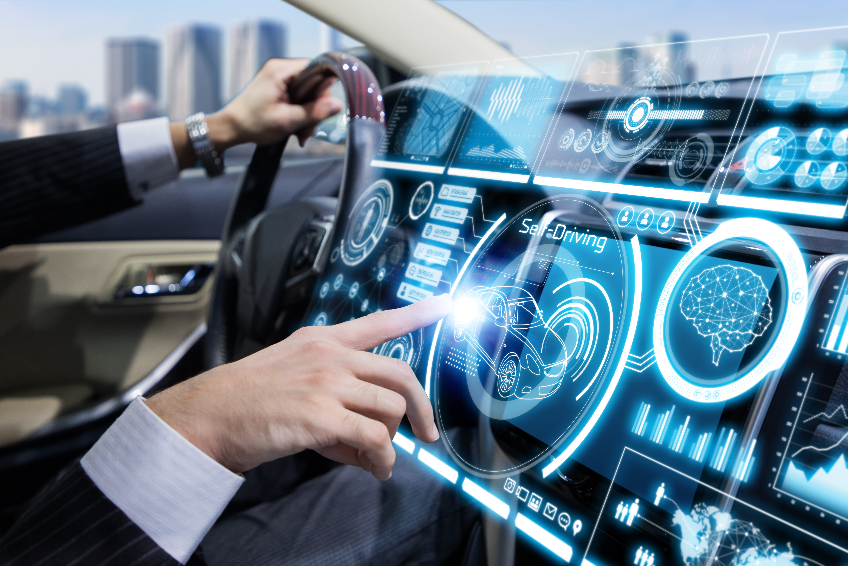
Latest Automotive Trends Shaping the Future of Driving reflect a major shift toward electrification, software-defined vehicles, artificial intelligence, advanced driver assistance, faster charging, and more connected digital experiences. Automakers are increasingly competing through batteries, computing power, safety systems, efficiency, and software as much as traditional engines or mechanical performance.
This article explains important automotive trends influencing drivers, manufacturers, and markets globally in 2026. It examines EV growth, battery innovation, autonomous technology, software, cybersecurity, charging infrastructure, sustainability, and changing ownership expectations.
Why the Automotive Industry Is Changing So Quickly
Modern vehicles are becoming a combination of transportation, computing, energy storage, communications technology, and advanced safety systems.
Automakers are therefore competing across several areas simultaneously:
- Electric powertrains
- Battery efficiency
- Vehicle software
- Artificial intelligence
- Driver-assistance technology
- Digital services
- Charging performance
- Cybersecurity
- Manufacturing efficiency
- Sustainability
The International Energy Agency’s 2026 Global EV Outlook identifies electrification, software-defined vehicles, artificial intelligence, faster charging, autonomous systems, and battery development as important forces reshaping automotive technology.
These developments do not mean traditional automotive engineering is becoming irrelevant.
Suspension, braking, steering, aerodynamics, safety structures, tires, manufacturing quality, and mechanical durability remain essential.
The major difference is that software and electronics are now becoming equally important parts of the driving experience.
Read More: Common Car Problems and How to Prevent Them
1. Electric Vehicles Continue Expanding
Electric vehicles remain one of the largest structural changes affecting the automotive industry.
Global electric car sales exceeded 20 million in 2025, representing approximately one-quarter of all new cars sold worldwide. Sales increased around 20% compared with 2024.
The global EV market is therefore moving beyond early adopters.
However, adoption varies considerably between regions.
China recorded particularly high EV penetration, Europe experienced renewed growth, while the U.S. market developed more slowly during 2025.
This means the future automotive market will not transition at the same speed everywhere.
Factors influencing adoption include:
- Vehicle prices
- Charging infrastructure
- Government policy
- Fuel prices
- Electricity prices
- Model availability
- Local manufacturing
- Consumer preferences
2. Buyers Have More EV Choices
Early electric-car markets offered relatively few models.
That is changing quickly.
The IEA reports that nearly 1,000 electric car models were available globally in 2025, representing around 40% of all available car models. It expects the number of electric models to exceed 1,100 in 2026 based on announced launches.
Greater model availability matters because drivers no longer have to consider EVs as one narrow category.
Electric vehicles now span:
- City cars
- Family sedans
- Crossovers
- SUVs
- Luxury cars
- Performance vehicles
- Pickup trucks
- Commercial vans
As competition expands, buyers are likely to place greater emphasis on price, efficiency, software, charging performance, comfort, and ownership experience rather than simply asking whether a car is electric.
3. EV Range Is No Longer the Only Competitive Metric
For years, electric-car marketing focused heavily on maximum driving range.
Range remains important, but the industry is beginning to compete on a broader set of features.
The global sales-weighted average battery-electric-car range was close to 380 kilometers in 2025 and had begun to plateau after years of increases.
This suggests that continuously increasing battery size may not always provide the best value.
Larger batteries can increase:
- Vehicle weight
- Material requirements
- Purchase price
- Charging requirements
As charging infrastructure improves, automakers can instead compete through:
- Faster charging
- Higher efficiency
- Better route planning
- Lower costs
- Battery durability
- Thermal management
For many drivers, a reasonably sized battery combined with reliable fast charging may be more practical than maximizing range at any cost.
4. Ultra-Fast Charging Is Becoming More Important
Charging speed is becoming one of the most important EV differentiators.
The IEA reports that next-generation charging systems above 250 kW are expanding and that average public charging-point speed increased globally during 2025.
The first 1,000-volt vehicle platforms appeared in 2025, while manufacturers continued announcing very short charging times into 2026.
Higher-voltage electrical systems can improve charging capability and power efficiency.
This matters especially during long trips.
A driver charging overnight at home rarely needs extreme charging speed.
A driver stopping during a motorway journey benefits considerably from reducing a charging session from a long break to a relatively short stop.
5. Charging Networks Are Becoming Part of the Vehicle Experience
Future EV buyers will increasingly judge cars not only by battery capacity but also by how easily they interact with charging infrastructure.
Important features include:
- Automatic charger navigation
- Battery preconditioning
- Charger availability information
- Real-time pricing
- Integrated payment
- Route planning
- Estimated arrival state of charge
Better software can reduce range anxiety even without increasing battery capacity.
For example, navigation systems can calculate:
- Remaining battery level
- Expected energy consumption
- Available charging stations
- Charging time
- Traffic conditions
- Weather effects
The vehicle can then plan charging stops automatically.
This integration between cars, software, and infrastructure will become increasingly important.
6. Battery Chemistry Is Diversifying
There is no single battery chemistry that is ideal for every vehicle.
Automakers are increasingly selecting battery technologies according to vehicle type, price, range, performance, and supply-chain requirements.
Lithium iron phosphate, or LFP, has become particularly important.
The IEA reported that LFP batteries represented more than 55% of global EV battery deployment in 2025.
LFP can offer advantages in areas such as cost, durability, and reduced dependence on nickel and cobalt.
Other chemistries can provide higher energy density, which may be useful for premium, performance, or long-range applications.
7. Sodium-Ion Batteries Are Emerging
Sodium-ion battery technology is also progressing.
The IEA reports that sodium-ion batteries have entered a scale-up phase, with major battery manufacturers developing production capacity.
Sodium-ion batteries currently have lower energy density than many lithium-ion alternatives, limiting their suitability for some long-range applications.
However, they may become attractive for:
- Affordable city cars
- Short-range vehicles
- Cold climates
- Commercial applications
- Stationary energy storage
This illustrates an important future automotive trend:
Different vehicles may increasingly use different battery technologies rather than the industry depending on one universal chemistry.
8. Battery Packs Are Becoming More Efficiently Integrated
Battery innovation is not limited to chemistry.
Manufacturers are also changing how cells are packaged inside vehicles.
Technologies such as cell-to-pack and cell-to-chassis designs reduce intermediate structural components, potentially improving packaging efficiency and usable energy density.
The IEA notes that these approaches are already contributing to improvements in modern EV battery design.
Future vehicles may therefore gain range or interior space without simply using larger batteries.
9. Software-Defined Vehicles Are Becoming a Major Trend
One of the biggest changes in automotive design is the shift toward software-defined vehicles, commonly called SDVs.
Traditional vehicles contain numerous independent electronic control units.
Newer architectures increasingly centralize computing functions.
The IEA reports that major automakers are developing more centralized vehicle software systems that allow important functions to be remotely updated, with battery-electric vehicles currently among the most advanced examples.
This can change how cars are developed and owned.
Future vehicles may receive improvements after leaving the factory.
These can include updates to:
- Infotainment
- Energy management
- Battery controls
- Driver-assistance systems
- Navigation
- Charging
- User interfaces
- Vehicle settings
10. Over-the-Air Updates Will Become Normal
Over-the-air software updates allow manufacturers to update vehicle systems without requiring every change to be performed at a dealership.
This can potentially improve:
- Bug fixes
- Navigation databases
- System performance
- Cybersecurity
- Battery management
- User interfaces
However, software updates also create new questions.
Drivers may increasingly need to consider:
- How long software support lasts
- Whether updates remain free
- What happens when hardware becomes outdated
- Whether features can be removed or changed
- How cybersecurity vulnerabilities are handled
Long-term software support could therefore become an important ownership factor.
11. Artificial Intelligence Is Entering the Vehicle
Artificial intelligence is becoming increasingly integrated into automotive systems.
Potential uses include:
- Driver monitoring
- Voice assistants
- Navigation
- Energy management
- Predictive maintenance
- Driver-assistance systems
- Cabin personalization
- Manufacturing quality control
The IEA identifies AI as an important enabler of software-defined vehicles, advanced driver assistance, autonomous functions, and improved EV battery management.
AI does not automatically make a car autonomous.
Many applications are designed to assist drivers rather than replace them.
12. Driver-Assistance Systems Are Becoming More Advanced
Advanced driver-assistance systems, commonly called ADAS, are expanding across more vehicle categories.
Common functions can include:
- Automatic emergency braking
- Adaptive cruise control
- Lane keeping
- Blind-spot monitoring
- Parking assistance
- Driver monitoring
- Traffic-sign recognition
These systems can help drivers manage specific situations, but their capabilities and limitations vary considerably.
Drivers should understand exactly what a vehicle can and cannot do.
An assistance system should not be confused with fully autonomous driving.
13. Safety Testing Is Beginning to Include More ADAS Technology
Vehicle safety assessment is adapting as electronic assistance systems become more important.
For example, NHTSA introduced new U.S. vehicle testing involving advanced driver-assistance systems as part of its New Car Assessment Program in 2026.
This reflects a broader shift in automotive safety.
Traditional crash protection remains essential, but future safety evaluations increasingly need to consider whether vehicles can help prevent collisions before they happen.
14. Autonomous Driving Is Progressing Gradually
Fully autonomous driving has developed more slowly than early industry predictions suggested.
The technical challenge involves far more than keeping a car centered in a lane.
Autonomous systems must handle:
- Unexpected road users
- Construction
- Weather
- Complex intersections
- Emergency situations
- Road markings
- Local regulations
- Human behavior
Nevertheless, commercial deployment is expanding in controlled applications.
The IEA reports that driverless taxi services were operating commercially in more than 20 cities by 2026, mainly in China and the United States.
15. Autonomous Vehicle Regulation Is Advancing
Regulation is beginning to catch up with automated-driving technology.
In June 2026, UNECE’s World Forum for Harmonization of Vehicle Regulations approved the first global regulatory framework designed to enable fully autonomous driving systems under harmonized safety requirements.
The framework includes areas such as:
- Safety management
- Testing
- Validation
- Monitoring during operation
This does not mean driverless cars will immediately become common everywhere.
National laws, infrastructure, insurance frameworks, technology maturity, and local approval processes still matter.
However, regulatory frameworks provide manufacturers with clearer requirements for future deployment.
16. Vehicles Are Becoming More Connected
Modern cars increasingly communicate with external digital systems.
Connectivity can support:
- Traffic information
- Remote vehicle access
- Emergency services
- Navigation
- Charging
- Diagnostics
- Fleet management
- Software updates
Connected-car technology can improve convenience and safety.
It also creates larger volumes of vehicle and user data.
This increases the importance of privacy and cybersecurity.
17. Cybersecurity Is Becoming a Core Automotive Requirement
A traditional mechanical vehicle could not be remotely attacked through connected software.
Modern vehicles are different.
Connected cars can contain cellular connections, Bluetooth, Wi-Fi, cloud services, mobile applications, and remote-update systems.
This creates new security requirements.
ISO/SAE 21434 provides an international framework for cybersecurity risk management across the lifecycle of automotive electrical and electronic systems.
Cybersecurity therefore needs to be considered from vehicle design through production, operation, maintenance, and eventual decommissioning.
18. Car Buyers May Start Evaluating Software Support
Consumers traditionally compared:
- Engine power
- Fuel economy
- Reliability
- Cabin quality
- Safety
- Resale value
Future buyers may increasingly ask additional questions.
For example:
- How frequently is the software updated?
- How long will updates continue?
- Is the infotainment system responsive?
- Does the mobile application work reliably?
- Are navigation and charging systems integrated?
- What happens if connected services end?
Software quality can increasingly influence how modern cars age.
A mechanically healthy vehicle can still feel outdated if important digital systems are no longer supported.
19. Vehicle Interiors Are Becoming Digital Spaces
Traditional dashboards built around physical gauges are increasingly being supplemented or replaced by digital displays.
Modern vehicles may include:
- Digital instrument clusters
- Central touchscreens
- Head-up displays
- Passenger displays
- Voice controls
- Personalized profiles
The challenge is maintaining usability.
More screens do not automatically create a better driving experience.
Critical functions should remain easy to operate without excessive distraction.
Future automotive design will therefore need to balance digital flexibility with ergonomics and safety.
20. Physical Controls Are Still Important
The move toward touchscreens has created debate about how drivers interact with essential vehicle functions.
Touchscreens provide flexibility because the interface can change through software.
However, physical controls can often be operated by feel with less visual attention.
Future interiors may increasingly use combinations of:
- Touchscreens
- Steering-wheel controls
- Physical switches
- Voice commands
- Head-up displays
The best solution depends on the function.
Frequently used driving controls generally benefit from quick and predictable access.
21. Cars Are Becoming More Personalized
Digital vehicle profiles can store settings such as:
- Seat position
- Climate preferences
- Driving modes
- Navigation destinations
- Audio preferences
- Charging behavior
Cloud-based profiles may eventually allow drivers to carry preferences between compatible vehicles.
Artificial intelligence could make personalization more adaptive.
For example, a vehicle might learn preferred climate settings or common routes.
However, personalization also increases data collection, making privacy controls increasingly important.
22. Smart Charging Will Connect Cars With Electricity Grids
Electric vehicles are not simply transportation devices.
They are also large mobile batteries.
Smart charging allows vehicles to shift electricity use based on factors such as:
- Grid demand
- Electricity prices
- Departure time
- Battery level
- Renewable energy availability
The IEA identifies smart charging as an important way to reduce peak electricity demand as EV adoption increases.
A driver who plugs in at 6 p.m. may not actually need charging to begin immediately.
Software could wait until demand decreases later at night.
23. Vehicle-to-Grid Technology Is Moving Toward Commercial Use
Vehicle-to-grid, or V2G, technology allows compatible electric vehicles to return electricity to the grid.
The IEA reports that the first commercial V2G offers for private EV owners appeared in 2025, although compatible models and regulatory frameworks remain limited.
Potential applications include:
- Supporting electricity grids
- Reducing peak demand
- Using lower-cost electricity
- Integrating renewable energy
Related vehicle-to-home systems may also allow certain EVs to provide backup electricity to a building.
This could eventually turn parked electric cars into active parts of the energy system.
24. Efficiency Is Becoming as Important as Battery Size
An efficient EV can travel farther using less battery capacity.
That creates several potential advantages:
- Lower weight
- Lower material use
- Faster charging
- Lower electricity consumption
- Potentially lower purchase cost
Automakers are therefore investing in:
- Aerodynamics
- Efficient motors
- Power electronics
- Thermal management
- Lightweight construction
- Low-resistance tires
The future of EV engineering is likely to focus increasingly on extracting more useful distance from each unit of stored energy.
25. Sustainability Is Moving Beyond Tailpipe Emissions
Electric cars eliminate tailpipe emissions while driving, but vehicle sustainability involves more than the powertrain.
Manufacturing still requires:
- Metals
- Plastics
- Energy
- Batteries
- Transportation
- Water
Automakers are therefore paying more attention to:
- Battery recycling
- Renewable manufacturing energy
- Recycled materials
- Lower-carbon steel
- Sustainable aluminum
- Vehicle durability
A smaller, efficient electric vehicle can have a very different environmental footprint from a large, heavy electric SUV.
Vehicle size remains relevant even when both are electric.
26. Battery Recycling Will Become More Important
As today’s EV fleet ages, increasing numbers of batteries will eventually reach the end of automotive use.
Recycling can recover valuable materials and reduce dependence on newly extracted resources.
The recycling industry is still developing because many of the EV batteries sold during recent rapid market growth remain in service.
Future automotive supply chains may increasingly incorporate recovered battery materials into new battery production.
This could improve resource efficiency and supply security.
27. Vehicle Manufacturing Is Becoming More Digitized
Automotive factories are also changing.
Manufacturers increasingly use:
- Robotics
- Machine vision
- AI-assisted quality control
- Digital twins
- Automated logistics
- Predictive maintenance
These technologies can improve manufacturing consistency and productivity.
They can also reduce the time needed to introduce new vehicle platforms.
As cars become more software-driven, vehicle development cycles may increasingly resemble technology-product development rather than traditional automotive programs alone.
28. Modular Vehicle Platforms Are Expanding
Automakers increasingly develop shared platforms that can support multiple models.
An EV platform might underpin:
- Sedan
- SUV
- Crossover
- Performance variant
Shared platforms can reduce development costs while allowing manufacturers to scale battery systems, electronics, and software across several vehicles.
Software-defined architecture can reinforce this trend by allowing the same computing systems to support different models with varying features.
29. Traditional Hybrids Are Remaining Relevant
Battery-electric vehicles are expanding, but hybrid technology remains significant.
Hybrid model availability increased during 2025, according to the IEA.
Hybrids can reduce fuel consumption without requiring drivers to depend entirely on charging infrastructure.
This can make them relevant in markets where:
- Public charging remains limited
- Apartment charging is difficult
- Long-distance travel is common
- EV purchase prices remain high
The future automotive market may therefore contain several powertrain types for years rather than changing instantly to one technology.
30. Plug-In Hybrids Are Evolving
Plug-in hybrids combine an internal-combustion engine with a battery that can be externally charged.
Some newer models are receiving larger batteries and longer electric driving capability.
The environmental and economic benefits depend heavily on driver behavior.
A plug-in hybrid charged regularly can operate very differently from one that rarely uses external charging.
For consumers, understanding actual usage patterns matters more than choosing a powertrain based purely on its label.
31. Electric Commercial Vehicles Are Expanding
Electrification is spreading beyond passenger cars.
Commercial vehicles increasingly include:
- Electric delivery vans
- City buses
- Trucks
- Fleet vehicles
Commercial fleets can be well suited to electrification when routes are predictable and vehicles return to depots for charging.
The IEA reported that electric-truck battery demand more than doubled globally during 2025, largely because of rapid growth in China.
Fleet electrification could therefore become another major automotive growth area.
32. Vehicle Ownership Models May Continue Changing
Traditional car ownership is not disappearing, but digital services are creating alternatives.
Depending on the market, consumers may increasingly use:
- Leasing
- Subscription services
- Car sharing
- Ride-hailing
- Fleet-based mobility
These models can be more attractive in cities where parking is expensive or vehicles are used infrequently.
However, personal vehicle ownership will remain important in areas where public transport is limited or distances are greater.
The future mobility market is likely to offer more ownership choices rather than one universal model.
33. Subscription Features Will Remain Controversial
Software-defined cars make it technically possible for manufacturers to activate or deactivate features remotely.
That can support optional services.
However, consumers may resist paying recurring fees for hardware already installed in the vehicle.
The long-term success of automotive subscriptions will likely depend on whether customers perceive continuous value.
Services involving live data, connectivity, cloud computing, or regularly updated software may be easier to justify than recurring charges for basic physical equipment.
34. Cars Will Generate More Data
Connected vehicles can produce information about:
- Location
- Vehicle condition
- Driving behavior
- Charging
- Diagnostics
- Infotainment usage
This information can support:
- Predictive maintenance
- Fleet optimization
- Navigation
- Insurance services
- Safety improvements
But vehicle data creates privacy questions.
Consumers will increasingly need transparent information about:
- What data is collected
- Why it is collected
- Where it is stored
- Who can access it
- Whether it can be deleted
Data governance may become an important part of automotive trust.
35. Predictive Maintenance Could Reduce Unexpected Repairs
Connected sensors can help identify developing faults before they become severe.
Future vehicles may increasingly monitor:
- Battery health
- Tire pressure
- Brake condition
- Electrical systems
- Cooling systems
- Charging performance
Instead of waiting for a failure, the vehicle could notify the owner that a component requires inspection.
This could make servicing more proactive.
However, predictive maintenance depends on accurate sensors, reliable software, and responsible use of vehicle data.
36. Safety Systems Will Become More Preventive
Traditional automotive safety focused heavily on protecting occupants during a crash.
Modern safety increasingly includes preventing the crash altogether.
Future vehicles may combine:
- Cameras
- Radar
- Ultrasonic sensors
- Driver monitoring
- Automated braking
- Steering assistance
UNECE has continued expanding international regulations covering automated lane keeping and other assistance systems.
The broader direction is clear:
Safety technology is becoming more active and predictive.
37. Driver Monitoring Is Becoming More Important
As vehicles take on more driving tasks, monitoring whether the driver remains attentive becomes increasingly important.
Driver-monitoring systems can use sensors or cameras to detect behaviors such as:
- Looking away from the road
- Drowsiness
- Lack of steering engagement
This is particularly relevant in partially automated vehicles.
If the system still requires human supervision, the vehicle needs a reliable way to determine whether the driver is ready to intervene.
38. Autonomous Technology Will Likely Expand First in Controlled Environments
Fully autonomous vehicles face enormous complexity on unrestricted public roads.
More controlled environments are easier.
Potential early applications include:
- Robotaxis in mapped urban zones
- Warehouse vehicles
- Port operations
- Mining
- Closed campuses
- Fixed-route shuttles
These use cases restrict the range of possible situations the automated system must manage.
That can make commercial deployment more practical than attempting immediate universal autonomy.
39. Cybersecurity Will Influence Vehicle Resale and Longevity
Cybersecurity is not only a new-car issue.
Connected vehicles can remain on the road for 10, 15, or more years.
Manufacturers therefore face an important long-term question:
How long will security updates remain available?
An unsupported connected vehicle could eventually face compatibility or cybersecurity risks even if its mechanical components remain functional.
Long-term software and security support may therefore become increasingly relevant to used-car buyers.
40. The Automotive Industry Is Becoming More Global and Competitive
EV growth has introduced new manufacturers and intensified competition.
The IEA reports that Chinese manufacturers accounted for more than half of global battery-electric car models and sales in 2025.
Traditional manufacturers are responding through:
- Dedicated EV platforms
- Lower-cost models
- Software partnerships
- Battery investments
- Manufacturing restructuring
Competition can benefit consumers through greater choice and faster innovation.
It can also create pressure on manufacturers that struggle to control development and production costs.
Automotive Trends at a Glance
| Trend | What Is Changing | Impact on Drivers |
|---|---|---|
| Electric vehicles | EV sales and model availability are growing | More powertrain choices |
| Fast charging | Higher-power systems are expanding | Shorter road-trip charging stops |
| Battery innovation | LFP, sodium-ion and new pack designs are developing | Lower costs and improved efficiency |
| Software-defined vehicles | More functions controlled centrally through software | Cars can improve after purchase |
| AI | More intelligent assistance and personalization | Smarter vehicle systems |
| ADAS | More automated braking, steering and monitoring | Greater active-safety capability |
| Autonomous driving | Controlled commercial deployment is expanding | Gradual reduction in driver workload |
| Connectivity | Vehicles communicate with cloud services and infrastructure | Better navigation and remote features |
| Cybersecurity | Connected systems require ongoing protection | Software support becomes more important |
| Smart charging | EV charging can react to grid conditions | Potentially lower costs and grid demand |
| Sustainability | Greater focus on manufacturing and recycling | Environmental impact measured beyond exhaust emissions |
What These Trends Mean for Car Buyers
Consumers evaluating a modern car should consider more than traditional specifications.
Important questions increasingly include:
- How efficient is the vehicle?
- How quickly can it charge?
- How reliable is the software?
- How long will software updates continue?
- Which driver-assistance functions are included?
- How well are those systems explained?
- Does the manufacturer protect customer data?
- Is charging infrastructure suitable for my journeys?
- Will the vehicle receive cybersecurity updates?
These factors can influence long-term ownership just as much as horsepower or cabin materials.
Should Buyers Wait for Future Technology?
Automotive technology will continue evolving.
Waiting for the “perfect” future car can therefore mean waiting indefinitely.
The better approach is to evaluate current requirements.
Ask:
- Does the vehicle meet my daily range?
- Is charging practical?
- Are the safety systems useful?
- Is the software stable?
- Can I afford the total ownership cost?
- Does the vehicle suit my actual driving?
Technology should support your needs rather than becoming the only reason for purchasing.
Which Trend Will Change Driving the Most?
There is unlikely to be one single winner.
Several developments reinforce one another.
Electric vehicles enable more centralized electronic architectures.
Centralized computing supports software-defined vehicles.
Software platforms enable better AI and driver-assistance systems.
Connected charging allows EVs to interact with electricity grids.
The result is a broader transformation from mechanically dominated vehicles toward highly integrated digital mobility platforms.
Frequently Asked Questions
What are the latest automotive trends in 2026?
Major trends include electric-vehicle growth, software-defined vehicles, AI-assisted features, advanced driver-assistance systems, faster EV charging, new battery chemistries, connected-car technology, cybersecurity, smart charging, and gradual development of autonomous vehicles.
Are electric vehicles still growing globally?
Yes. Global electric-car sales exceeded 20 million in 2025 and represented approximately one-quarter of new-car sales worldwide, although adoption levels vary significantly between regions.
What is a software-defined vehicle?
A software-defined vehicle uses centralized computing and software to control a growing number of vehicle functions. This architecture can support remote updates, new digital features, improved battery management, and advanced driver-assistance technology.
Will cars become fully autonomous soon?
Fully autonomous technology is developing, but widespread deployment remains complex. Commercial driverless services already operate in selected cities, while regulation, infrastructure, safety validation, and technical limitations continue to influence broader adoption.
What battery technologies are shaping future EVs?
LFP batteries are widely used, while sodium-ion technology is beginning to scale. Manufacturers are also improving battery-pack structures, thermal management, charging systems, and other technologies that affect cost and efficiency.
Why is automotive cybersecurity becoming important?
Modern vehicles contain connected electronic systems, remote software, and cloud services. These create potential cybersecurity risks, making secure design, monitoring, updates, and lifecycle risk management increasingly important.
Will fast charging eliminate EV range anxiety?
Faster charging can make long-distance EV travel more convenient, but charging availability, reliability, vehicle efficiency, weather, and infrastructure coverage also influence the experience. Charging performance should therefore be considered alongside driving range.
Will software become as important as mechanical engineering?
For many modern vehicles, software is becoming increasingly important because it manages infotainment, charging, battery systems, driver assistance, connectivity, and other functions. Mechanical engineering remains equally essential for safety, durability, handling, braking, and ride quality.
Conclusion
Latest Automotive Trends Shaping the Future of Driving show that the car industry is moving far beyond traditional engine development. Electrification, battery innovation, artificial intelligence, centralized software, connected services, advanced safety systems, cybersecurity, and faster charging are increasingly shaping how vehicles are designed and used.
