

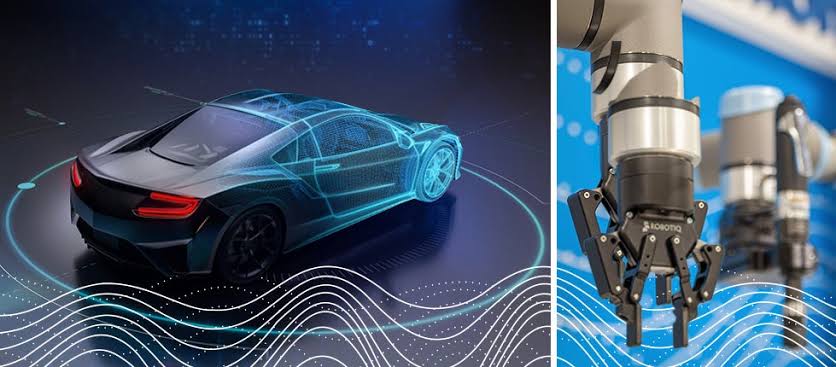
How Modern Technology Is Changing the Auto Industry is no longer a future-looking question. Electric powertrains, driver-assistance systems, connected services, artificial intelligence, and software-defined vehicles are changing how cars are designed, built, sold, maintained, and updated. Automakers increasingly compete on computing capability as well as performance and efficiency.
These changes affect drivers and manufacturers. Technology can improve safety, convenience, efficiency, and production, while creating challenges around cybersecurity, reliability, infrastructure, repairability, and cost. Understanding the shift separates innovation from marketing hype.
The Auto Industry Is Becoming a Technology Industry
For much of automotive history, manufacturers competed primarily through engines, transmissions, chassis engineering, reliability, styling, and manufacturing quality.
Those factors still matter, but modern vehicles increasingly combine mechanical engineering with:
- high-voltage batteries;
- electric motors;
- advanced processors;
- cameras and radar;
- cloud connectivity;
- artificial intelligence;
- sophisticated operating software;
- mobile applications;
- over-the-air updates;
- automated manufacturing systems.
The result is a fundamental change in both the vehicle itself and the business behind it.
A modern car can increasingly function as a connected computing platform as well as transportation.
Read More : Top Car Features Drivers Actually Use Every Day
1. Electric Vehicles Are Changing Vehicle Engineering
Electrification is one of the largest technological shifts affecting the automotive industry.
A battery-electric vehicle replaces many traditional components—including the combustion engine, fuel system, and conventional exhaust system—with batteries, power electronics, and electric motors.
That affects much more than how the vehicle is powered.
Automakers must reconsider:
- vehicle platforms;
- battery placement;
- thermal management;
- aerodynamics;
- manufacturing plants;
- supply chains;
- charging systems;
- software;
- service procedures.
Battery production itself has become an important part of automotive competition.
The International Energy Agency reported that global EV battery deployment reached about 1.2 TWh in 2025, nearly 30% higher than in 2024.
Battery Technology Is Becoming a Competitive Advantage
Battery development increasingly focuses on improving several characteristics simultaneously:
- driving range;
- charging speed;
- energy density;
- cost;
- durability;
- thermal performance;
- safety.
Lithium iron phosphate, or LFP, batteries have become important in lower-cost EV applications, while manufacturers and suppliers continue researching technologies such as solid-state and sodium-ion batteries.
Not every emerging battery chemistry is ready for mass-market vehicles, however. Commercial viability depends on cost, manufacturing scale, durability, safety, and supply availability.
2. Cars Are Becoming Software-Defined
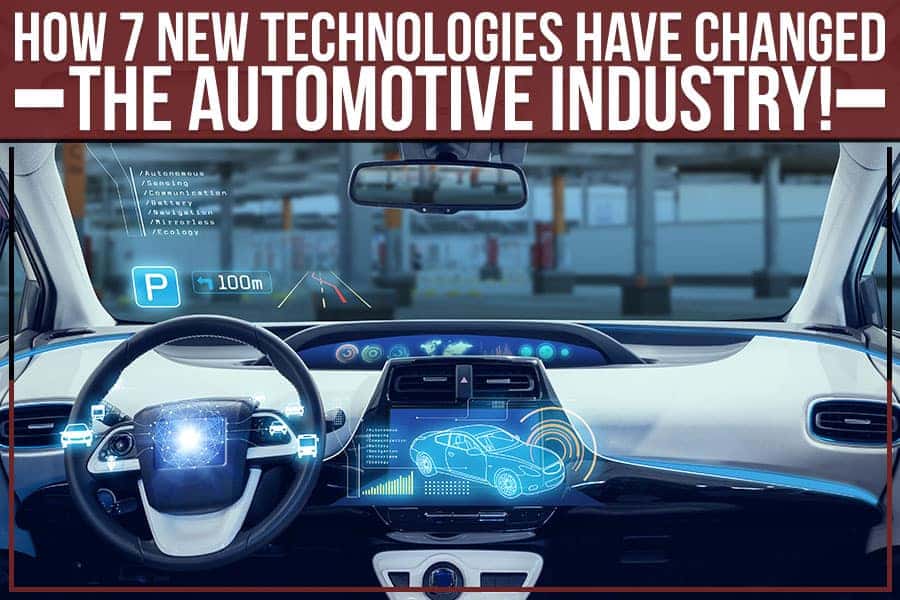
One of the most important automotive trends is the rise of the software-defined vehicle, often abbreviated as SDV.
Traditional cars often use many separate electronic control units, each responsible for specific functions.
New architectures increasingly consolidate computing into more powerful central computers and zone controllers.
Bosch describes software-defined vehicles as architectures that separate software from hardware, allowing vehicle functions to remain adaptable throughout the vehicle’s lifecycle. This architecture can support over-the-air updates and software-based feature additions.
Why Software-Defined Vehicles Matter
Software can now influence functions including:
- infotainment;
- battery management;
- energy efficiency;
- climate control;
- driver assistance;
- vehicle dynamics;
- navigation;
- personalization;
- connectivity.
This changes how manufacturers develop cars.
Instead of completing most functionality before a vehicle leaves the factory, manufacturers can potentially continue improving certain software features later.
3. Over-the-Air Updates Are Changing Car Ownership
Smartphones and computers have conditioned consumers to expect regular software updates.
Cars increasingly work the same way.
An over-the-air, or OTA, update can deliver compatible software changes remotely rather than requiring the owner to visit a workshop for every software-related update.
Depending on the manufacturer and vehicle architecture, an update may affect:
- infotainment software;
- navigation;
- interface design;
- charging management;
- bug fixes;
- connected services;
- some vehicle functions.
The Car Can Change After Purchase
This creates an important shift.
Traditionally, the vehicle a customer purchased remained largely unchanged until physical parts were replaced.
Software-defined vehicles can potentially gain revised functionality throughout ownership.
That creates opportunities but also new responsibilities.
Updates must be thoroughly validated because software increasingly interacts with safety-critical vehicle systems.
4. Artificial Intelligence Is Entering the Vehicle
Artificial intelligence is affecting several areas of automotive technology.
Inside vehicles, AI can help systems interpret data from:
- cameras;
- radar;
- microphones;
- navigation;
- vehicle sensors;
- driver inputs.
It can also support functions such as voice interaction, driver monitoring, route optimization, energy management, and personalization.
More Natural In-Car Assistants
Traditional voice controls often required exact commands.
Newer AI-based systems can potentially understand more conversational language and interpret context more effectively.
A driver might ask for:
- a nearby charging station;
- a warmer cabin;
- a particular destination;
- information about the vehicle;
- navigation to a restaurant.
The goal is to reduce the number of menus drivers need to navigate manually.
5. Driver-Assistance Technology Is Becoming More Advanced
Vehicle safety technology has developed significantly beyond basic cruise control.
Modern advanced driver-assistance systems, or ADAS, can include:
- forward collision warning;
- automatic emergency braking;
- pedestrian detection;
- blind-spot warning;
- lane departure warning;
- lane-keeping assistance;
- adaptive cruise control;
- rear cross-traffic warning.
NHTSA explains that some systems warn drivers about danger while others can intervene by braking or steering.
Driver Assistance Is Not the Same as Full Self-Driving
This distinction is important.
Many current vehicles can assist with acceleration, braking, or steering under certain conditions, but the driver remains responsible for operating and monitoring the vehicle.
NHTSA currently describes Level 1 and Level 2 systems as driver-assistance technologies requiring driver attention.
Marketing terminology can vary between manufacturers, so buyers should understand what a system actually does rather than judging it by its product name.
6. Sensors Are Giving Cars Greater Awareness
Modern cars increasingly depend on sensors.
Different systems may use combinations of:
Cameras
Cameras can identify road markings, traffic signs, vehicles, pedestrians, and other visual information.
Radar
Radar can measure the distance and relative speed of objects and is commonly used for functions such as adaptive cruise control and collision detection.
Ultrasonic Sensors
These are commonly used for short-distance detection around the vehicle, particularly during parking.
LiDAR
Some advanced automated-driving systems use LiDAR to create detailed representations of surrounding environments.
Manufacturers choose different sensor combinations depending on cost, application, and system design.
7. Connected Cars Are Creating New Services
Connectivity allows vehicles to communicate with external networks.
A connected vehicle may support:
- live traffic information;
- remote vehicle status;
- smartphone applications;
- emergency services;
- navigation updates;
- remote locking;
- remote climate control;
- charging management;
- vehicle diagnostics.
For EV owners, an app might show battery level, estimated range, charging status, and cabin temperature before the driver reaches the car.
Cars Are Becoming Part of a Digital Ecosystem
The vehicle increasingly interacts with:
- smartphones;
- cloud servers;
- charging networks;
- navigation services;
- manufacturer platforms;
- digital accounts.
That creates convenience but also makes software availability, privacy, and cybersecurity more important.
8. Cybersecurity Has Become an Automotive Safety Issue
A vehicle with numerous connected systems creates potential digital attack surfaces.
Modern vehicles commonly use technologies such as cellular connections, Bluetooth, Wi-Fi, mobile apps, and cloud services.
NHTSA has emphasized that increasing wireless connectivity and software-enabled functionality create additional cybersecurity considerations for the automotive industry.
Automotive cybersecurity therefore needs to protect:
- communication networks;
- software;
- electronic control systems;
- personal data;
- connected services;
- safety-critical functions.
Manufacturers Must Think Like Technology Companies
Cybersecurity can no longer be treated only as an IT-department problem.
Modern automakers need processes for:
- detecting vulnerabilities;
- securing software;
- authenticating communications;
- testing updates;
- responding to incidents;
- protecting critical vehicle networks.
A safer connected vehicle also needs to be a secure connected vehicle.
9. Digital Twins Are Changing Vehicle Development
Automakers do not need to physically build every design variation before testing it.
Digital twin technology allows engineers to create virtual representations of vehicles, components, manufacturing equipment, or production lines.
These virtual models can help engineers evaluate changes before implementing them physically.
Siemens describes automotive digital twins as tools that can be used to simulate and validate manufacturing systems before production begins.
What Can Engineers Test Digitally?
Depending on the simulation, engineers may investigate:
- aerodynamics;
- structural behavior;
- electronics;
- software;
- thermal performance;
- production processes;
- factory layouts;
- automation.
Digital testing does not eliminate physical testing.
Instead, it can help engineers identify problems earlier and narrow the number of physical prototypes or production changes required.
10. AI Is Also Changing Car Manufacturing
Artificial intelligence is not limited to the vehicle itself.
Manufacturers can use AI and machine learning in areas such as:
- quality inspection;
- production planning;
- predictive maintenance;
- robotics;
- battery inspection;
- supply-chain management;
- engineering analysis.
For example, computer-vision systems can examine components or finished assemblies for possible defects.
The IEA notes that AI-based image analysis can help identify battery manufacturing defects and their causes, potentially improving production yield and reducing waste.
11. Factories Are Becoming More Automated and Flexible
Automation has been part of car manufacturing for decades.
What is changing is the sophistication and connectivity of that automation.
Modern factories increasingly combine:
- industrial robots;
- automated guided vehicles;
- machine vision;
- IoT sensors;
- digital twins;
- real-time production data;
- artificial intelligence.
This can help manufacturers adjust production lines more quickly when introducing a new vehicle or powertrain.
That flexibility is increasingly important when a single manufacturer may need to produce gasoline, hybrid, plug-in hybrid, and electric vehicles.
12. Technology Is Changing the Dashboard
Vehicle interiors have changed dramatically.
Physical gauges and buttons increasingly coexist with—or are replaced by—digital interfaces.
Modern cabins can include:
- digital instrument clusters;
- large touchscreens;
- head-up displays;
- voice assistants;
- smartphone integration;
- wireless updates;
- configurable interfaces.
Bigger Screens Are Not Automatically Better
Technology only improves the driving experience when it remains usable.
A large touchscreen can provide clear maps and useful vehicle information, but forcing frequently used controls through several menus can add unnecessary complexity.
Good automotive technology needs both capability and effective human-machine-interface design.
NHTSA has specifically researched driver-vehicle interface design because safe operation requires interfaces that account for driver limitations and expectations.
13. Smartphones Are Becoming Part of the Car Key
Digital-key technology allows compatible smartphones or wearable devices to perform some functions traditionally handled by a physical key.
Depending on the vehicle, a digital key may allow users to:
- unlock doors;
- lock the vehicle;
- start the car;
- share access digitally.
Shared digital access can be useful for families, fleets, rentals, and car-sharing services.
The implementation varies between manufacturers, so buyers should check phone compatibility and security requirements carefully.
14. EV Technology Is Changing Car Design
Electric vehicles give designers different packaging possibilities.
Because there is no conventional engine and transmission layout, EV platforms can sometimes offer:
- longer wheelbases;
- flat cabin floors;
- additional interior storage;
- different front-end proportions;
- improved cabin packaging.
Batteries mounted beneath the passenger compartment can also influence the vehicle’s center of gravity and chassis design.
Not every EV uses these advantages equally, but electrification gives engineers more flexibility than simply replacing an engine with an electric motor.
15. Charging Technology Is Becoming Part of the Vehicle Experience
For EV manufacturers, charging performance matters almost as much as battery range.
Important factors include:
- AC charging capability;
- DC fast-charging speed;
- battery temperature management;
- charging-curve stability;
- route planning;
- charger compatibility.
Two EVs with similar advertised range can provide very different road-trip experiences if one charges significantly faster or maintains high charging power for longer.
Technology is therefore shifting consumer attention from simply asking “How far can it drive?” to also asking “How quickly can it recharge?”
16. Technology Is Creating New Automotive Business Models
Software also changes how automakers make money.
Historically, most revenue came primarily from selling vehicles, financing them, servicing them, and supplying parts.
Connected vehicles create possibilities for additional services such as:
- premium connectivity;
- navigation services;
- entertainment;
- fleet services;
- software upgrades;
- subscription features.
This remains a controversial area.
Drivers may appreciate useful connected services but can object when hardware already installed in the vehicle requires an additional subscription.
Manufacturers therefore have to balance recurring revenue with customer expectations about ownership.
17. Vehicle Repair Is Becoming More Technical
A minor collision once involved mainly mechanical and body repairs.
Modern vehicles may have cameras, radar modules, ultrasonic sensors, high-voltage components, and complex electronics integrated into bumpers, mirrors, windshields, and body panels.
After certain repairs, technicians may need to calibrate driver-assistance equipment.
EVs also require technicians trained to work around high-voltage systems.
As vehicles become more sophisticated, workshops increasingly need:
- diagnostic software;
- electronic testing equipment;
- calibration tools;
- cybersecurity knowledge;
- high-voltage training.
The automotive technician’s role is becoming more digitally focused.
18. Technology Is Changing the Skills Automakers Need
Automakers still need mechanical engineers, manufacturing specialists, and designers.
But they increasingly compete for talent in fields such as:
- software engineering;
- artificial intelligence;
- battery chemistry;
- cybersecurity;
- semiconductor engineering;
- cloud computing;
- data science.
This changes the structure of automotive companies and their relationships with suppliers.
Technology companies, semiconductor manufacturers, battery producers, mapping providers, and cloud platforms are becoming increasingly important parts of the automotive ecosystem.
19. Supply Chains Are Changing
Electrification also changes what materials and components automakers need.
Traditional vehicle supply chains revolve heavily around engines, transmissions, fuel systems, and mechanical components.
EV production increases demand for:
- battery cells;
- lithium;
- graphite;
- cathode materials;
- power electronics;
- electric motors;
- semiconductors.
The IEA reports that global electric-car production reached nearly 22 million vehicles in 2025, illustrating the scale at which electrification now affects automotive manufacturing and trade.
Battery manufacturing remains geographically concentrated, making supply-chain resilience an important strategic issue for automakers.
20. Cars Can Become More Personalized
Software and user profiles allow cars to remember individual preferences.
Depending on the vehicle, a profile might store:
- seat position;
- mirror position;
- climate settings;
- navigation preferences;
- audio settings;
- interface layout;
- driver-assistance preferences.
Cloud-connected profiles may eventually allow some settings to follow users between compatible vehicles.
This is another example of cars becoming more like personal digital devices.
Benefits of Modern Automotive Technology
The technologies reshaping the auto industry can provide meaningful advantages.
Improved Safety
Driver-assistance systems can help detect risks or intervene in specific situations.
Greater Efficiency
Electrification, better aerodynamics, intelligent energy management, and optimized manufacturing can reduce energy consumption.
Better Convenience
Remote apps, digital keys, navigation, voice assistants, and OTA updates can simplify ownership.
More Personalization
Software allows vehicles to adapt more closely to individual preferences.
Faster Development
Simulation, digital twins, AI, and virtual testing can help engineering teams test designs earlier in development.
Challenges Created by Automotive Technology
The transformation is not entirely positive or straightforward.
Cybersecurity
More connectivity means more systems need protection.
Software Problems
A vehicle with more code also has more potential for software bugs.
Privacy
Connected vehicles can generate significant amounts of information, making data handling an important issue.
Repair Complexity
Advanced sensors, electronics, batteries, and software can require specialist equipment and knowledge.
Technology Obsolescence
Infotainment hardware and software can age more visibly than traditional mechanical components.
Driver Distraction
Poorly designed touchscreens and interfaces can make simple tasks unnecessarily complicated.
What Should Car Buyers Pay Attention To?
Buyers should evaluate technology based on usefulness rather than novelty.
Before purchasing a technology-heavy vehicle, check:
- whether essential controls are easy to operate;
- how long software updates are supported;
- which services require subscriptions;
- smartphone compatibility;
- charging performance if buying an EV;
- driver-assistance capability and limitations;
- warranty coverage for electronic components;
- local repair and service availability;
- cybersecurity and privacy settings;
- whether advertised features are included or optional.
A simpler system that works reliably can provide more value than an impressive feature that is difficult to use.
Frequently Asked Questions
How is technology changing the automotive industry?
Technology is changing vehicle powertrains, safety systems, software, manufacturing, connectivity, repairs, and business models. Cars increasingly combine mechanical systems with batteries, processors, sensors, cloud services, and sophisticated software.
What is the biggest technological change in the auto industry?
There is no single change affecting every part of the industry equally. Electrification and software-defined vehicle architecture are among the most significant because they affect vehicle engineering, manufacturing, supply chains, ownership, and future product development.
What is a software-defined vehicle?
A software-defined vehicle uses an electronic architecture in which software controls and enables many vehicle functions. More centralized computing can allow features to be updated or changed through software throughout the vehicle’s life.
How is artificial intelligence used in cars?
AI can support voice assistants, sensor interpretation, driver monitoring, navigation, personalization, energy management, engineering, manufacturing inspection, and other data-intensive functions.
Are modern cars becoming fully autonomous?
Driver-assistance technology is becoming increasingly capable, but assistance should not automatically be confused with full autonomy. NHTSA states that drivers remain responsible when using Level 1 and Level 2 assistance systems.
Why is cybersecurity important in modern vehicles?
Connected vehicles contain software and wireless communication pathways that can introduce potential vulnerabilities. Protecting vehicle networks, data, control systems, and software has therefore become part of automotive safety engineering.
Will technology make cars more expensive to repair?
It can make some repairs more complex because cameras, radar, electronics, software, and high-voltage equipment may require specialist diagnostics or calibration. Actual repair costs depend on the vehicle and damage involved.
Conclusion
How Modern Technology Is Changing the Auto Industry can be seen throughout the entire vehicle lifecycle. Electrification is transforming powertrains and supply chains, while software, AI, connectivity, advanced safety systems, digital twins, and automation are changing how cars are developed, manufactured, driven, updated, and repaired.

2 Comments
Pingback: Best Family Cars for Comfort, Safety, and Space
Pingback: Smart Car Maintenance Tips Every Driver Should Know