

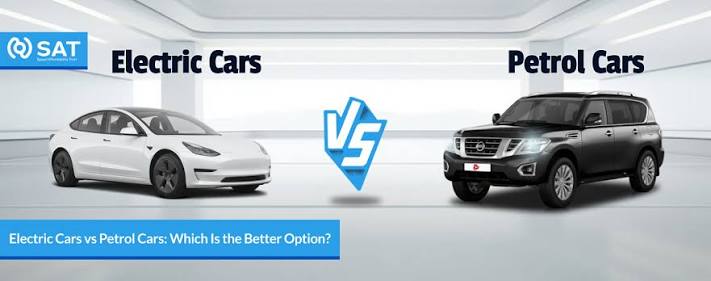
Electric Cars vs Petrol Cars: Which One Makes Sense? is a practical question for anyone comparing purchase price, running costs, range, charging, maintenance, and ownership. Electric cars can cut maintenance and eliminate fuel stops, while petrol cars still offer faster refueling and long-distance flexibility in many places.
The better choice depends on your mileage, home-charging access, electricity and fuel prices, routes, budget, and how long you plan to keep the car. This guide compares both options without oversimplifying the trade-offs.
Electric Cars vs Petrol Cars at a Glance
Neither powertrain is automatically better for every driver. An electric car can be extremely convenient when it is charged at home, while a petrol car can make more sense for drivers who regularly travel through areas with limited charging infrastructure.
| Factor | Electric Car | Petrol Car |
|---|---|---|
| Home energy convenience | Excellent with home charging | Requires fuel-station visits |
| Long-distance refueling | Charging takes longer | Usually much faster |
| Routine maintenance | Generally lower | More engine-related servicing |
| Tailpipe emissions | None | Produces tailpipe emissions |
| Driving noise | Generally quieter | Engine noise present |
| Purchase price | Varies considerably by model | Wide range of affordable choices |
| Range | Increasing, but model-dependent | Usually strong for long trips |
| Public infrastructure | Depends heavily on location | Fuel stations widely established |
| Apartment ownership | Can be difficult without charging | Generally straightforward |
| Cold-weather efficiency | Range can decline | Fuel economy can also decline |
| Towing and sustained high loads | Can reduce EV range substantially | Also increases fuel use, but refueling is quick |
The most important difference is not simply electricity versus petrol. It is whether each vehicle fits your daily routine.
Read More : Best New Cars to Watch This Year
How Electric Cars and Petrol Cars Work
Understanding the mechanical difference makes many ownership differences easier to understand.
How an Electric Car Works
A battery-electric vehicle stores electricity in a high-voltage battery pack. One or more electric motors use that stored energy to move the vehicle.
An EV does not have a conventional petrol engine, fuel tank, exhaust system, or engine oil. Electric motors also use fewer moving components than internal-combustion engines.
The U.S. Department of Energy notes that all-electric vehicles generally require less routine maintenance because they have fewer moving parts and fewer fluids requiring regular replacement. Regenerative braking can also reduce conventional brake wear.
How a Petrol Car Works
A petrol car uses an internal-combustion engine. Petrol is mixed with air and burned inside the engine, producing energy that eventually turns the wheels.
That process requires numerous mechanical systems, including components associated with lubrication, cooling, combustion, intake, exhaust, and emissions control.
Modern petrol vehicles can be highly refined, but they still require periodic engine-related maintenance that a battery-electric vehicle does not.
Which Costs Less to Buy?
There is no universal answer.
Electric cars have historically carried relatively high purchase prices because the battery pack is a major component of vehicle cost. However, the market now includes EVs across a much wider range of price points.
Petrol cars also range from inexpensive small vehicles to premium performance models, so comparing an average EV with an average petrol car can be misleading.
A more useful approach is to compare equivalent vehicles.
For example, compare:
- similar vehicle sizes;
- comparable trim levels;
- similar safety equipment;
- equivalent performance;
- similar warranty coverage;
- financing rates;
- applicable taxes or incentives.
Do not choose an EV solely because an incentive appears attractive. Incentive programs, eligibility requirements, tax treatment, and manufacturer offers vary by country and can change.
Running Costs: Electricity vs Petrol
Running cost is one of the strongest arguments for examining an EV, but the result depends on local energy prices.
Instead of relying on a universal claim that one is cheaper, calculate your own cost.
EV Energy-Cost Formula
Use:
Battery energy consumption × electricity price = driving energy cost
For example, if an EV consumes 18 kWh per 100 km:
18 × your electricity price per kWh = cost per 100 km
Petrol Cost Formula
Use:
Fuel consumption × petrol price = driving fuel cost
If a petrol car consumes 7 litres per 100 km:
7 × your local petrol price per litre = cost per 100 km
Now compare the two results.
This calculation is much more useful than relying on generic online savings estimates because fuel and electricity prices differ substantially between countries, cities, charging networks, and electricity tariffs.
Home Charging Changes the EV Equation
For many drivers, the biggest advantage of an electric car is not performance or emissions. It is being able to charge where the vehicle is already parked.
A driver with reliable home charging can plug in overnight and begin many mornings with sufficient charge for normal daily use.
This removes most routine visits to a fuel station.
However, the experience can be very different for someone living in an apartment without a dedicated charging point.
An EV Makes More Sense When You Can Charge at Home
Home charging is particularly valuable if:
- you have private parking;
- you can install suitable charging equipment;
- your daily mileage is predictable;
- your electricity tariff makes overnight charging economical.
An EV Can Be Less Convenient Without Home Charging
Depending entirely on public chargers may mean:
- driving specifically to a charger;
- waiting for an available charging bay;
- paying higher public charging rates;
- planning charging around other activities;
- dealing with charger reliability or availability.
Before buying an EV, map the chargers you would realistically use rather than simply checking how many exist in your city.
Which Is Better for Long Trips?
Petrol cars retain a practical advantage when rapid refueling and maximum route flexibility are priorities.
A petrol stop can usually be completed quickly, and established fuel infrastructure makes route planning straightforward in most populated areas.
EV road trips require more planning.
The real experience depends on:
- battery size;
- motorway efficiency;
- charging speed;
- charger availability;
- charger reliability;
- weather;
- traffic;
- elevation;
- your preferred route.
A modern EV capable of fast DC charging can be practical for long journeys, particularly on routes with dependable charging stations. But the experience is still different from filling a petrol tank.
Drivers who frequently cover very long distances through poorly served areas should examine their regular routes before switching.
Which Requires Less Maintenance?
Electric cars generally have the advantage for routine mechanical maintenance.
According to the U.S. Department of Energy’s Alternative Fuels Data Center, all-electric vehicles typically require less maintenance because the battery, motor, and associated electronics require comparatively little regular servicing, there are fewer fluids to replace, and regenerative braking can reduce brake wear.
A petrol vehicle may require items such as:
- engine oil and oil-filter changes;
- spark-plug replacement;
- engine air filters;
- belts or related engine components;
- exhaust-system repairs;
- other internal-combustion servicing.
An EV still needs maintenance.
Owners must continue checking or replacing items such as:
- tyres;
- brakes;
- suspension components;
- cabin filters;
- wiper blades;
- cooling-system components where applicable;
- alignment;
- air conditioning.
Lower routine maintenance does not mean zero maintenance.
What About EV Battery Replacement?
Battery replacement is one of the most common concerns among potential EV buyers.
EV batteries do degrade over time, just as other vehicle components age. However, buyers should not assume that the battery automatically needs complete replacement after a few years.
The Department of Energy notes that EV batteries are designed for extended use but will eventually wear, and recommends checking manufacturer battery warranties and maintenance information.
Before buying a new or used EV, check:
- battery warranty duration;
- mileage limits;
- minimum capacity guarantees where specified;
- battery health on a used vehicle;
- replacement or repair policies;
- availability of qualified service facilities.
Battery condition is particularly important when comparing older used electric cars.
Which Has Better Performance?
Electric motors can deliver torque immediately, which gives many EVs quick and smooth acceleration.
Even ordinary electric cars can therefore feel responsive in urban driving.
Petrol vehicles behave differently. Engine speed, transmission design, turbocharging, gearing, and displacement influence how power is delivered.
Drivers who value traditional engine sound, manual transmissions, or certain types of performance driving may still prefer petrol cars.
The more useful question is not which technology is faster overall. Compare the actual models you are considering.
Which Is More Efficient?
Electric drivetrains are fundamentally more energy-efficient than internal-combustion drivetrains.
The EPA notes that electric vehicles convert a much greater share of stored energy into vehicle movement, while a substantial portion of energy in petrol vehicles is lost through heat and other inefficiencies.
That mechanical efficiency is one reason EVs can deliver relatively low energy consumption during everyday driving.
Efficiency still varies substantially between EVs. Vehicle weight, aerodynamics, tyres, speed, weather, heating, air conditioning, and driving style all matter.
Electric Cars vs Petrol Cars for the Environment
Electric cars produce no tailpipe emissions.
Petrol cars release carbon dioxide and other combustion-related pollutants through their exhaust.
That does not mean electric cars have zero environmental impact.
Battery manufacturing requires materials and energy, while charging emissions depend partly on how local electricity is generated.
The EPA states that EVs typically produce lower greenhouse-gas emissions over their lifetime than average petrol vehicles even when battery manufacturing and electricity generation are considered, although the exact result varies according to the electricity source and vehicle.
Therefore, a more accurate comparison considers the full lifecycle rather than looking only at the exhaust pipe.
What Happens When Electricity Comes From Fossil Fuels?
An EV still has no tailpipe emissions, but generating its electricity can create emissions.
How much depends on the electricity grid.
Charging primarily from coal-generated electricity has a different footprint from charging from a grid with significant solar, wind, hydroelectric, nuclear, or other lower-carbon electricity.
EPA guidance explains that electricity-generation emissions vary by location, but EVs typically remain responsible for lower greenhouse-gas emissions than comparable gasoline vehicles.
Which Is Better for City Driving?
Electric cars can be particularly well suited to city driving.
Reasons include:
- quiet operation;
- regenerative braking;
- efficient low-speed operation;
- no idling fuel consumption in the conventional sense;
- convenient overnight charging when available;
- smooth stop-and-go acceleration.
Urban drivers with short daily journeys and private charging may rarely need public fast charging.
However, an apartment resident without a parking charger may find a small, efficient petrol car more convenient despite driving fewer kilometres.
Charging access matters as much as driving distance.
Which Is Better for Rural Drivers?
The answer depends heavily on infrastructure.
An EV can work well for a rural household that:
- has private parking;
- can charge at home;
- travels predictable distances;
- has sufficient battery range;
- has useful fast chargers along longer routes.
A petrol vehicle can be more practical when journeys regularly pass through remote areas with little or no dependable charging infrastructure.
For rural ownership, evaluate your actual routes rather than relying on national charger totals.
Electric Cars vs Petrol Cars for High-Mileage Drivers
High annual mileage can strengthen the financial case for an EV because energy and maintenance savings accumulate over more kilometres.
But only if charging is affordable.
A driver covering substantial mileage while relying on expensive public rapid charging may have a very different ownership cost from someone charging cheaply at home.
For high-mileage users, calculate:
Annual kilometres ÷ 100 × energy cost per 100 km
Do the calculation for both vehicles.
Then add:
- insurance;
- servicing;
- tyres;
- taxes;
- finance costs;
- depreciation;
- charging equipment.
That produces a more realistic total-cost comparison.
What About Depreciation and Resale Value?
Depreciation can be one of the largest ownership expenses for either type of vehicle.
It is also difficult to generalize.
Resale value can depend on:
- brand reputation;
- vehicle demand;
- battery condition;
- petrol prices;
- electricity costs;
- new-car discounts;
- technology improvements;
- charging standards;
- vehicle reliability;
- local policies.
Rapid improvements in batteries, range, charging, and new-EV pricing can affect older electric models.
Petrol vehicles face different uncertainties, including fuel costs, regulations, taxes, and changing consumer demand.
Check used-market pricing for the exact model rather than assuming either powertrain automatically has better resale value.
Who Should Buy an Electric Car?
An EV is especially worth considering when you:
- can charge at home;
- mostly make predictable daily journeys;
- want lower routine maintenance;
- value quiet, smooth driving;
- frequently drive in urban or suburban areas;
- have reliable fast charging on longer routes;
- can buy an EV that comfortably covers your normal mileage.
Home charging is arguably the most important factor.
Who Should Buy a Petrol Car?
A petrol car may make more sense when you:
- cannot charge conveniently at home or work;
- regularly travel through areas with poor charger coverage;
- need very quick refueling;
- frequently make unplanned long-distance journeys;
- have a limited purchase budget with few suitable EV choices;
- plan to tow long distances regularly;
- need a vehicle type for which suitable EV options remain limited.
Choosing petrol does not automatically mean ignoring efficiency. A lighter, efficient petrol vehicle may make more sense than purchasing an unnecessarily large vehicle of either powertrain.
What About a Hybrid?
Drivers who see advantages on both sides may consider a hybrid.
A conventional hybrid combines a petrol engine with an electric motor but normally does not need external charging.
A plug-in hybrid has a larger battery that can be charged externally while retaining a petrol engine for longer trips.
Plug-in hybrids are most useful when owners actually charge them regularly. Otherwise, carrying a larger battery and combustion drivetrain may reduce some of the intended benefits.
How to Decide in Five Steps
1. Measure Your Real Daily Mileage
Check how far you normally drive rather than estimating from your longest annual road trip.
2. Check Charging Before Shopping for an EV
Determine whether you can charge at home, work, or another regular location.
3. Calculate Energy Costs
Compare electricity cost per 100 km with petrol cost per 100 km.
4. Compare Total Ownership Costs
Include purchase price, finance, insurance, maintenance, depreciation, energy, taxes, and potential charging-equipment costs.
5. Test Both Powertrains
Drive comparable vehicles on roads similar to those you use every day.
Seating, visibility, ride comfort, controls, boot space, road noise, and driving position can matter more during ownership than the powertrain itself.
Frequently Asked Questions
Are electric cars cheaper to run than petrol cars?
They often can be, particularly when charged at home using relatively inexpensive electricity. However, the actual result depends on electricity prices, petrol prices, vehicle efficiency, mileage, and public-charging costs.
Do electric cars cost less to maintain?
Generally, yes. Battery-electric vehicles have fewer moving mechanical components, require no engine-oil changes, and can reduce brake wear through regenerative braking. They still require tyre, suspension, brake, cooling, and other routine checks.
Are electric cars good for long journeys?
They can be if the vehicle has adequate motorway range and the route has reliable fast chargers. Drivers frequently travelling through areas with limited charging may still find petrol more convenient.
How long does an electric-car battery last?
Battery lifespan depends on battery chemistry, thermal management, charging habits, climate, mileage, and manufacturer design. Batteries are designed for extended use, but buyers should examine the warranty and battery-health information for the specific vehicle.
Are electric cars really better for the environment?
EVs have no tailpipe emissions. Electricity generation and battery production still create environmental impacts, but EPA analysis indicates that EV lifetime greenhouse-gas emissions are typically lower than those of average gasoline vehicles.
Is an EV worth buying without home charging?
It can be, but the case becomes more dependent on nearby public or workplace charging. Before buying, compare charger availability, charging prices, reliability, and how much time you would spend charging.
Is petrol better for low-mileage drivers?
Not necessarily. Low annual mileage reduces the amount of money either vehicle can save through energy efficiency. Purchase price, depreciation, insurance, convenience, and how long you keep the vehicle may therefore become more important.
Should I buy an EV or wait?
Buy based on whether today’s vehicle meets your requirements. Battery technology and charging infrastructure will continue evolving, but petrol vehicles are evolving too. Waiting indefinitely for future technology can prevent you from solving today’s transportation needs.
Conclusion
Electric Cars vs Petrol Cars is ultimately a question of how and where you drive. EVs offer strong efficiency, lower routine maintenance, quiet operation, and convenient home charging, while petrol cars retain advantages in rapid refueling, infrastructure coverage, and flexible long-distance travel.

1 Comment
Pingback: Top Car Features Drivers Actually Use Every Day